2026-11-06
Levinas at Sinnonhyeon Station Dermatology: Still Unhappy with Your Facial Contour After Repeated Lifting?
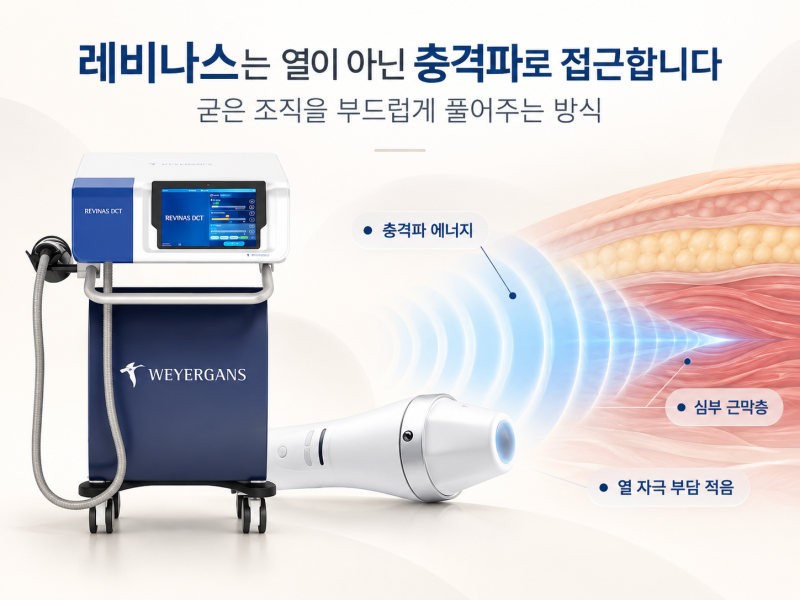
Levinas uses extracorporeal shockwave energy rather than heat to stimulate stiff fascia beneath the skin, helping prepare the face before other lifting treatments.

A smiling woman resting her chin on her hand, with the text: “Revinas: why facial contours come alive naturally.”
Sometimes when you look in the mirror, your facial contour seems more uneven than before. Or, even after several lifting treatments, it may not feel as refined as you had hoped.
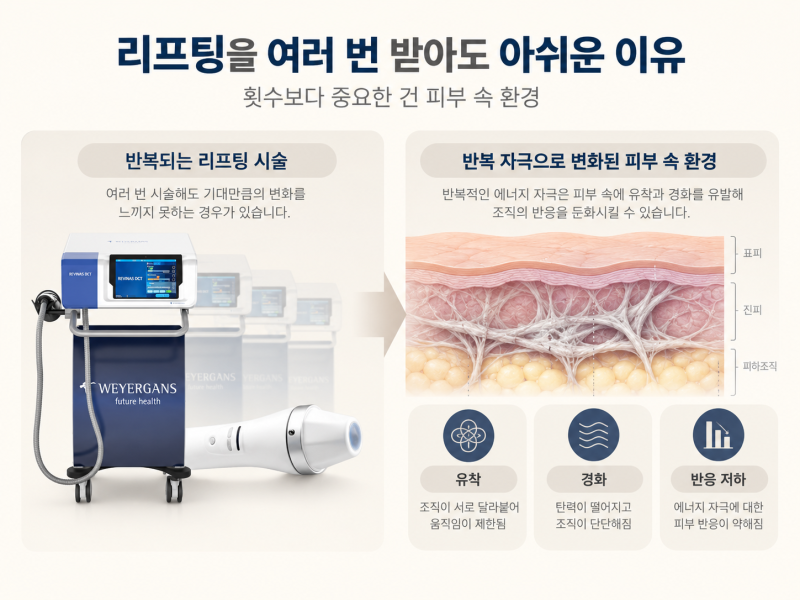
Why repeated lifting can disappoint: repeated energy may cause adhesion, stiffening and weaker response in the tissue under the skin.
In situations like this, some people at Sinnonhyeon Station Dermatology ask about Levinas. Before simply increasing the intensity or the number of sessions, it may be more important to first look at the current condition of the tissue beneath your skin.
If the skin has not simply sagged, but the fascial layer or subcutaneous tissue has become stiff and lost its mobility, then changing the order of your approach may be more helpful than repeating the same heat-based treatment.
Today, we'll explain in a straightforward way how Levinas differs from conventional lifting and which types of faces may benefit from this approach.
Why isn't my skin smooth even after multiple lifting treatments?
Widely used lifting treatments such as Ulthera and Thermage each target different layers and work in different ways. However, if the deeper tissues of the face are firmly adhered or stiff, simply adding more energy to pull the skin may not produce the smooth response you're hoping for.
It's a bit like trying to shape hardened clay: it's easier to soften it first and then mold it into shape. That's why, rather than automatically choosing a stronger lifting treatment just because the skin is sagging, it's important to first check whether the tissue is in a state where it can move.
How does Levinas approach things differently from heat?
Unlike devices that rely mainly on thermal energy, Levinas is described as using extracorporeal shockwave energy.
The Revinas device uses shockwaves rather than heat to soften stiff tissue, reaching the deep fascia with less heat burden.
The device generates shockwaves through electromagnetic induction inside the unit, and these waves are delivered to the fascial and muscle layers.
Conventional shockwave devices concentrate energy at a single point, whereas Levinas forms a cylindrical focal zone about 1 cm long. Its distinguishing feature is that it stimulates a relatively broad area of tissue.
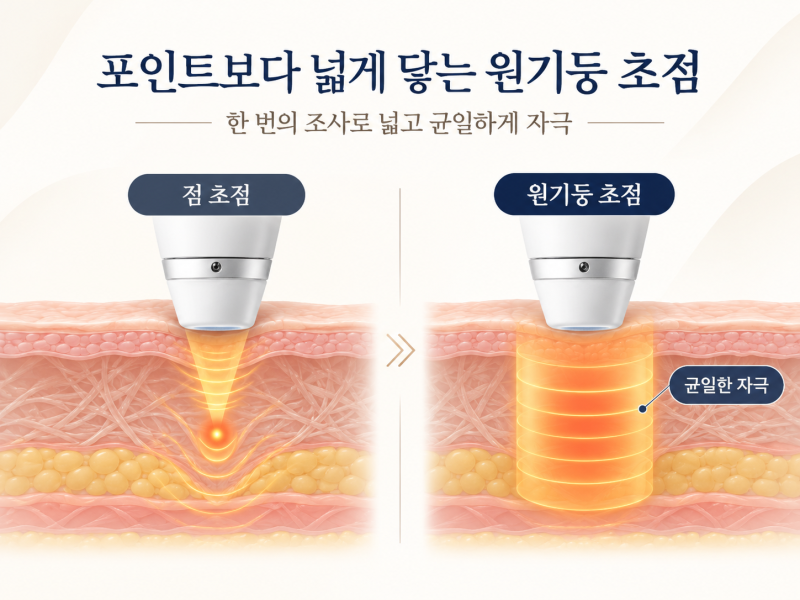
Point focus versus cylindrical focus: the cylindrical beam reaches a wider area, stimulating it broadly and evenly with a single shot.
In other words, rather than heating the skin's surface, it works more by physically stimulating the stiff tissue and fascia beneath. That's an easy way to understand it.
For this reason, Levinas lifting is described less as a procedure that simply pulls the face upward and more as an approach that prepares the foundation beneath the skin before other lifting treatments take effect.
Might a face that looks hollow still need lifting?
Faces that look sunken below the cheekbones while the outer cheeks or jawline appear heavy are sometimes described as “peanut-shaped” faces.
In such cases, simply filling in volume or pulling the entire face may leave the balance looking unnatural.
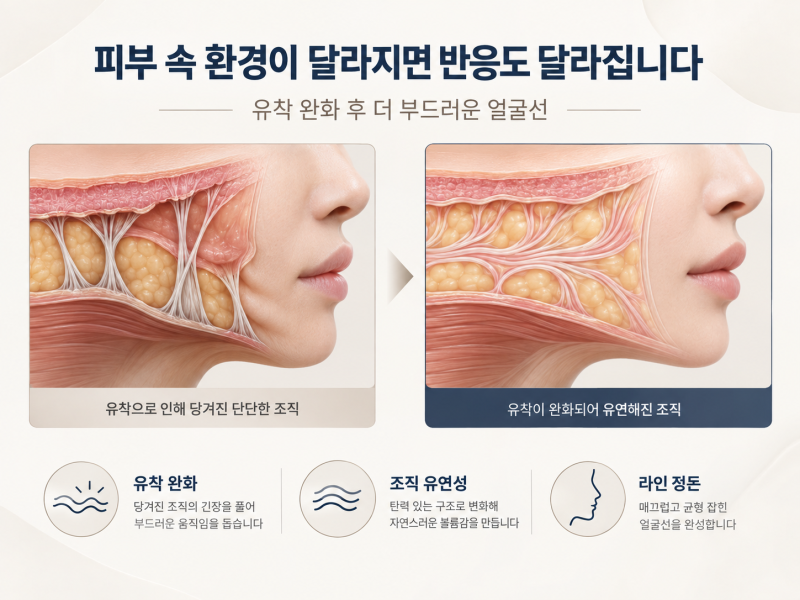
Cross-sections compare taut tissue held by adhesions with supple tissue after they ease, giving a softer facial line.
The key to treating a peanut-shaped face is not just looking at the sunken areas, but also examining the tension and adhesions in the surrounding tissue.
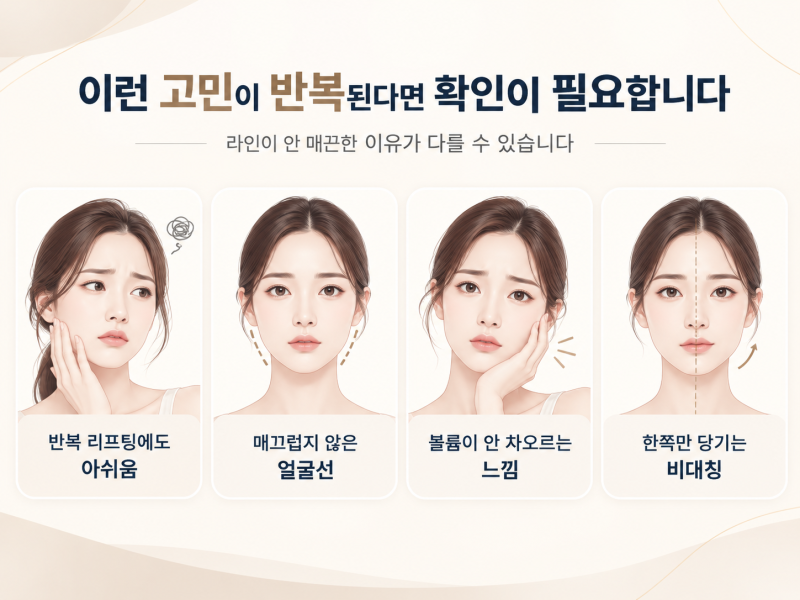
Four concerns to check: still unsatisfied after repeated lifting, uneven face line, volume not filling in, and one-sided asymmetry.
If the fascia is stiff and pulling in a particular area, the approach is to first soften its movement and then reassess the facial contour.
That said, the reasons a face looks hollow can vary, including fat volume, bone structure, and skin elasticity. So not every case can be explained by adhesions alone.
Could it be related if only one side of the mouth corner looks raised?
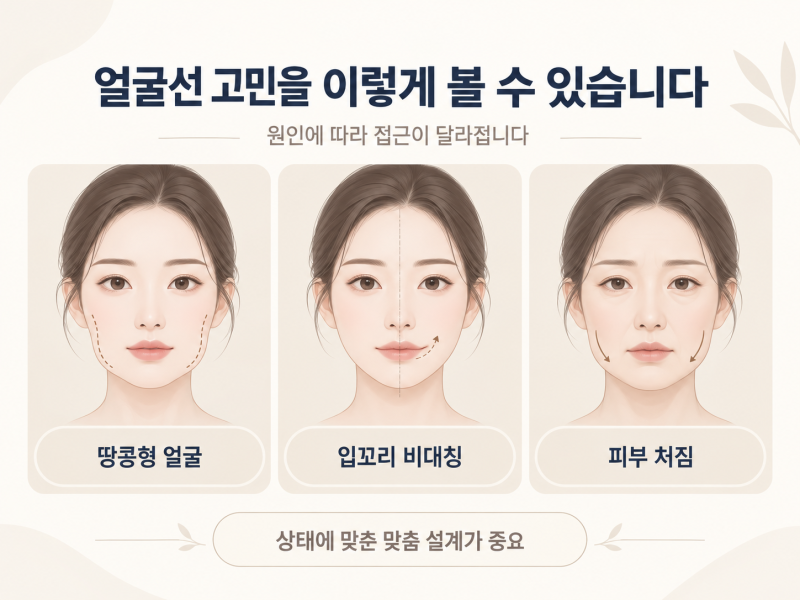
Three face-line concerns: peanut-shaped face, uneven mouth corners and sagging skin. A plan tailored to each condition is called important.
Some people notice in photos that one corner of the mouth is higher than the other, or that their expression looks asymmetrical.
In such cases, it's necessary to look beyond skin sagging alone and also examine the tension in the facial expression muscles and differences in movement between the left and right sides.
Levinas may also be used for mouth corner asymmetry caused by muscle tension or left-right imbalance.
However, asymmetry can stem from many factors beyond muscles, including dental bite, skeletal structure, and neurological causes, so it's important to first identify the cause.
What about skin that is sensitive to heat?
Some people hesitate to get lifting treatments because of concerns about warmth or redness.
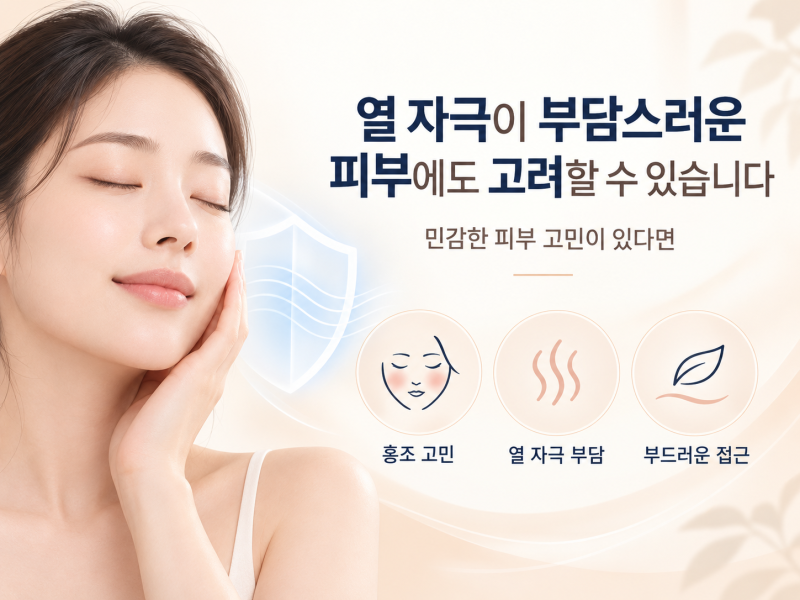
Woman touching her cheek beside a shield graphic. Text: can be considered for heat-sensitive skin, noting redness and a gentle approach.
Those who are receiving treatment for facial redness, or whose skin flushes easily, may need to be even more careful when choosing a new energy-based treatment.
Because Levinas uses shockwaves rather than heat, it is described as an option distinct from conventional radiofrequency or ultrasound lifting.
However, not using heat alone doesn't make it suitable for every type of sensitive skin. Current skin inflammation and treatment history must also be checked.
Would it be better to combine it with other lifting treatments?
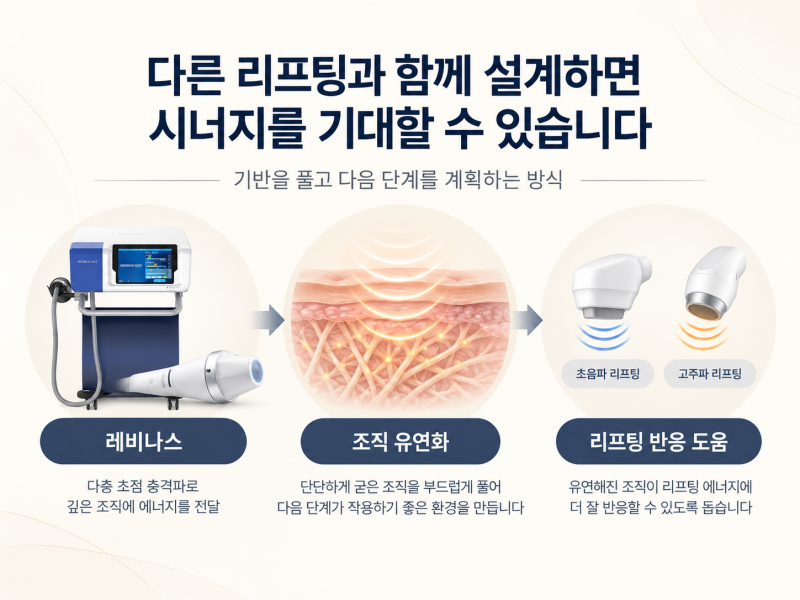
Combination plan: Revinas softens tissue with shockwaves, then ultrasound or RF lifting follows. The image says this may offer synergy.
Another feature of Levinas is that, rather than being used alone, it can be considered alongside other lifting treatments in a planned sequence.
First, the stiff tissue is stimulated to soften its movement. Then, if needed, a treatment that targets a different layer, such as Ulthera or Thermage, can follow.
Put simply, this isn't about repeatedly receiving the same device at higher intensity. It's about separating the preparation stage from the main treatment stage based on your facial condition.
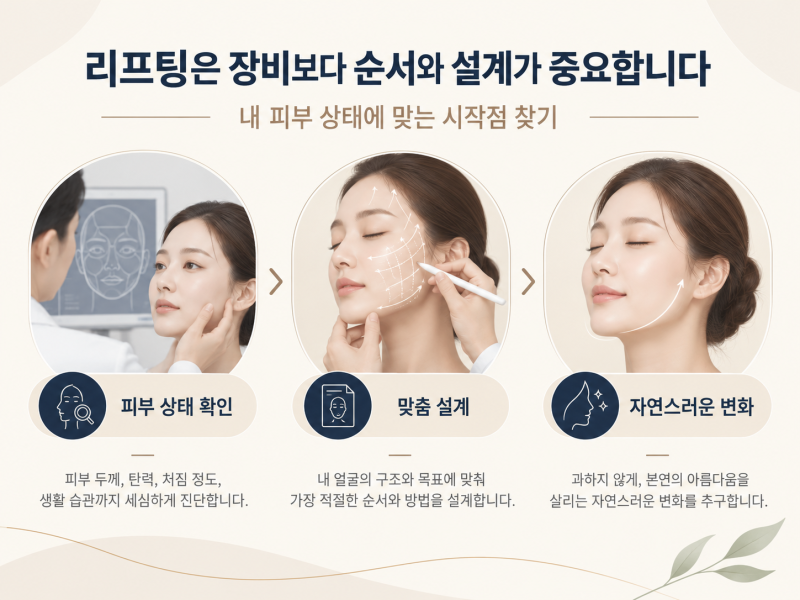
Order and planning matter more than the device: check skin condition, design a personalized plan, then aim for natural change.
Combining treatments does not automatically increase their effect. The sequence and intervals should vary depending on skin thickness, fat volume, and previous treatment history.
In particular, reviewing which devices you've received before and in which areas you saw less change can help determine the direction of your next treatment.
Rather than trying to solve everything at once, it's more natural to take a stepwise approach while observing how your face responds.
In the end, what may need to change is the sequence rather than the intensity.
If you're not satisfied after several lifting treatments, that doesn't necessarily mean the treatment was too weak.
The approach may differ depending on the condition of the tissue beneath your face, including which areas are stiff and which areas should keep their volume.
So rather than immediately thinking “stronger” or “more often,” it's worth first checking what is interfering with your face's response to lifting.
Levinas is easier to understand not as a treatment that competes with conventional lifting, but as a way to prepare the environment beneath the skin for the next step.
In the end, natural change depends less on any single device and more on how you approach it, in what order, based on your facial structure and tissue condition.
Frequently Asked Questions
How is Levinas different from conventional lifting?
Unlike devices centered on thermal energy, Levinas is described as using extracorporeal shockwave energy. The device generates shockwaves through electromagnetic induction inside the unit and delivers them to the fascial and muscle layers.
Does Levinas use heat for lifting?
No. Levinas is described as using extracorporeal shockwave energy instead of thermal energy. Rather than heating the skin's surface, it is best understood as physically stimulating the stiff tissue and fascia beneath the skin.
Why might my facial contour still disappoint after multiple lifting treatments?
If the tissue beneath the face is firmly adhered or stiff, lifting may not respond as much as you'd like. In such cases, it is said to be important to first check whether the tissue is in a state where it can move, rather than simply adding more energy to pull the skin.
Is it enough to just add volume to a peanut-shaped face?
No. Simply filling in volume or pulling the entire face may leave the balance looking unnatural. The key to treating a peanut-shaped face is to examine not only the sunken areas but also the tension and adhesions in the surrounding tissue.
Can Levinas be used for asymmetrical mouth corners?
It can be considered when asymmetry is caused by muscle tension or left-right imbalance. However, asymmetry can also result from dental bite, skeletal structure, or neurological factors, so identifying the cause first is important.
Can people with facial redness or sensitive skin receive this treatment?
Not using heat alone does not make it suitable for every type of sensitive skin. For those currently receiving treatment for facial redness or whose skin flushes easily, current skin inflammation and treatment history should be checked.