2026-11-03
Men's Square Jaw Botox at Sinnonhyeon Station Dermatology: Will It Look Natural on Men?
A guide to men's square jaw Botox: why the masseter makes the jaw look wide, how dosage is decided, when results appear, and what side effects to expect.


Men's square-jaw Botox: will the jawline really change? A young man touches his jaw thoughtfully.
Many men consider Botox because their chin looks especially wide in the mirror or their lower face appears heavy in photos.
Those who are researching this for the first time often wonder:
Will my face look too narrow if a man gets it? Do men need more units than women?
At Sinnonhyeon Station Dermatology, we don't start a men's square jaw Botox consultation by looking at gender. Instead, we check how firmly the muscle below the ear tightens when you clench your teeth, whether there is any difference between the left and right sides, and what kind of jawline you are hoping for.
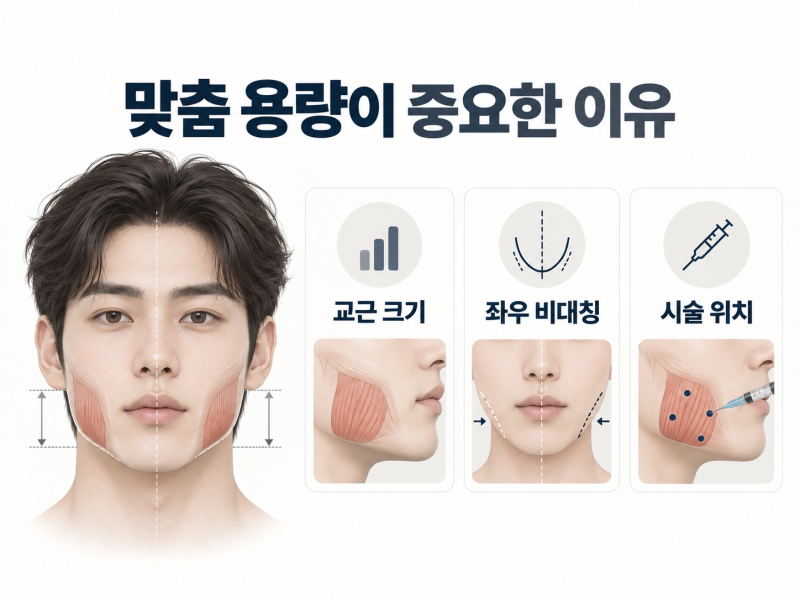
Why a customized dose matters: masseter muscle size, left-right asymmetry, and injection position.
Men don't necessarily need a larger amount, and treatment isn't done in a completely different way from women's. Today, we'll walk through some key points worth knowing if you're considering men's square jaw Botox.
Why does the square jaw look more prominent in men?
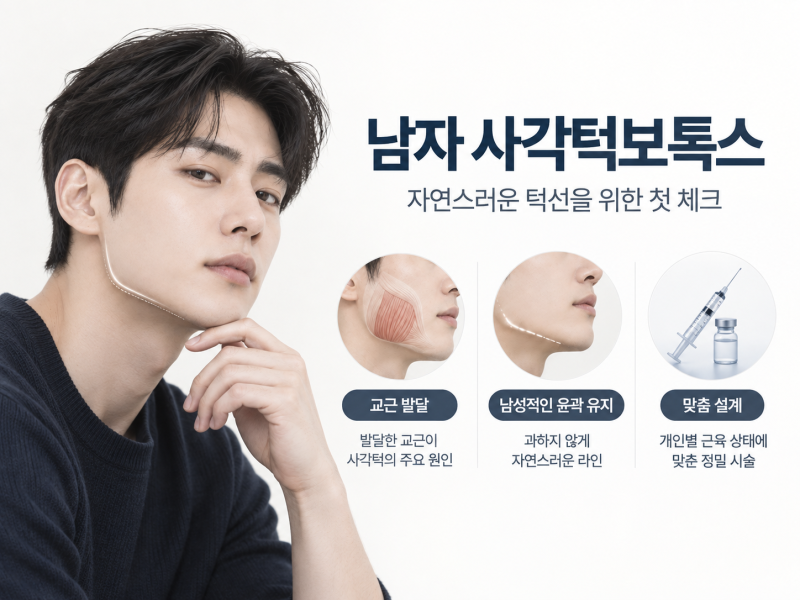
Men's square-jaw Botox checks: a developed masseter as the main cause, keeping a natural masculine contour, and a plan tailored to each muscle.
The main target of square jaw Botox is the masseter muscle. This is the muscle used to chew and clench your teeth. When it develops thickly, the area from below the ear to the jaw angle can look wider on the outside.
Men tend to have larger, firmer masseter muscles. As a result, the lower face may look broad from the front, and the jawline may feel heavy from the side.
That's why, for some men looking into square jaw treatment, muscle has a bigger influence than bone. However, a wide-looking jaw doesn't always come from muscle alone. If you're just starting to research square jaw Botox, it helps to first figure out whether your jaw looks wide because of muscle, bone, or cheek fat.
Won't my face become too narrow if a man gets it?
This is the concern we hear most often. For men, the goal isn't necessarily to create a slim, small face. It's also entirely possible to reduce the bulk of an overdeveloped muscle so that a man's natural jawline looks more defined.
That's why, when judging results, it's better to look at whether the lower face looks naturally refined from both the front and the side, rather than just how much the face width has decreased.
Some people want to keep a certain jaw angle, while others prefer a softer look. Because of this difference, the injection area and goal can vary even for the same masseter Botox. When you consult with us, it helps to say more than “please make my face smaller.” Let us know how much jaw angle you'd like to keep and whether the front or side view bothers you more, and that will help us set the right direction.
Do men need to use more units?
Not necessarily. Men often have larger masseter muscles, so the dose tends to be higher. However, the actual amount is determined more by muscle size and the balance between the left and right sides than by gender. For both sides combined, treatment is commonly considered in the range of about 50 to 100 units, and men with especially large muscles may opt for 100 units. That said, there's no need to set a high dose from the start.
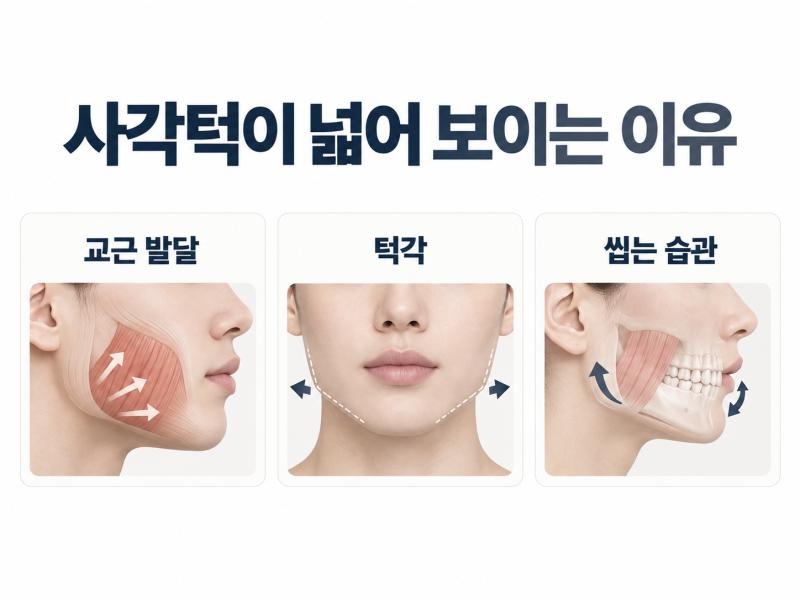
Why a square jaw looks wide: developed masseter muscles, the jaw angle, and chewing habits.
The more natural approach is to check how thick your jaw muscles become when you clench your teeth, as well as your everyday chewing habits, and then decide on the appropriate range.
When will I start to notice the results?
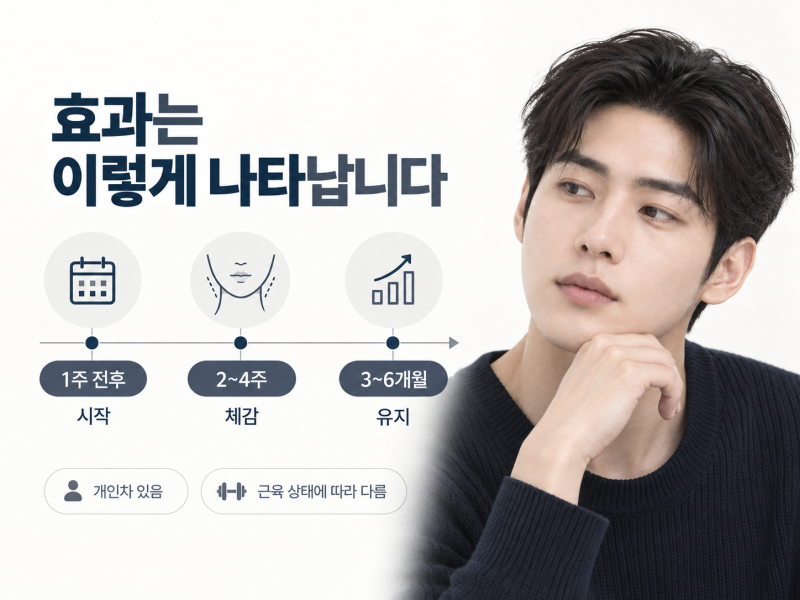
How results appear: starts around week 1, noticeable at 2–4 weeks, lasts 3–6 months. Varies by person and muscle condition.
Your jawline doesn't change right away the day after Botox. The muscle's strength decreases gradually first, and volume changes follow, so it's best to give it some time before judging the results.
Gender doesn't make a major difference in when effects appear or how long they last. Individual muscle characteristics and usage habits have a bigger impact. If you often eat tough foods or have a strong habit of clenching your teeth, your muscles may stay highly active.
Should I get my temples treated as well?
Not everyone needs this. For cosmetic purposes, treatment is usually centered on the masseter below the ears. However, if you have a habit of grinding or clenching your teeth, the temporalis muscle near the temples may also be evaluated.
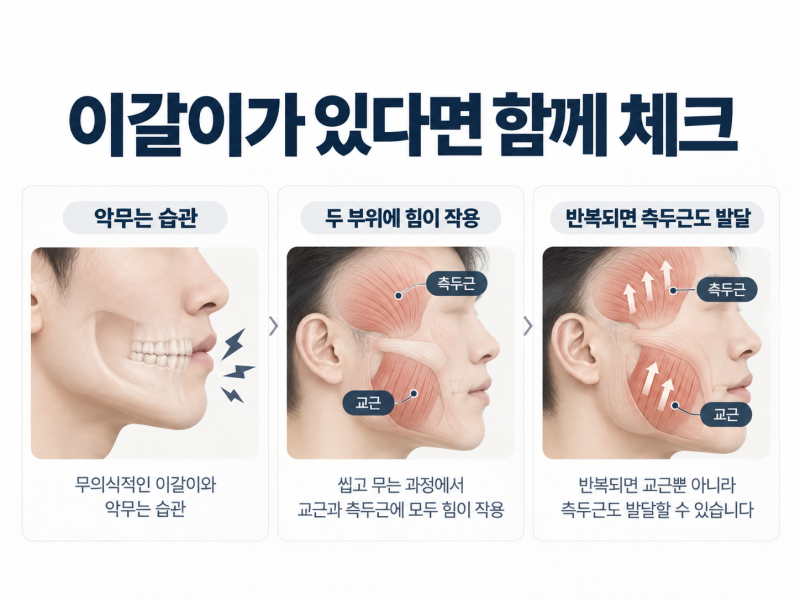
If you grind your teeth: clenching works both the masseter and temporalis, and over time the temporalis can also enlarge.
If you've also been looking into teeth-grinding Botox, it's a good idea to check together whether repeatedly reducing only the masseter is the right approach, and whether your temporalis muscle is overdeveloped.
Are side effects more severe in men?
The types of side effects don't differ significantly between men and women.
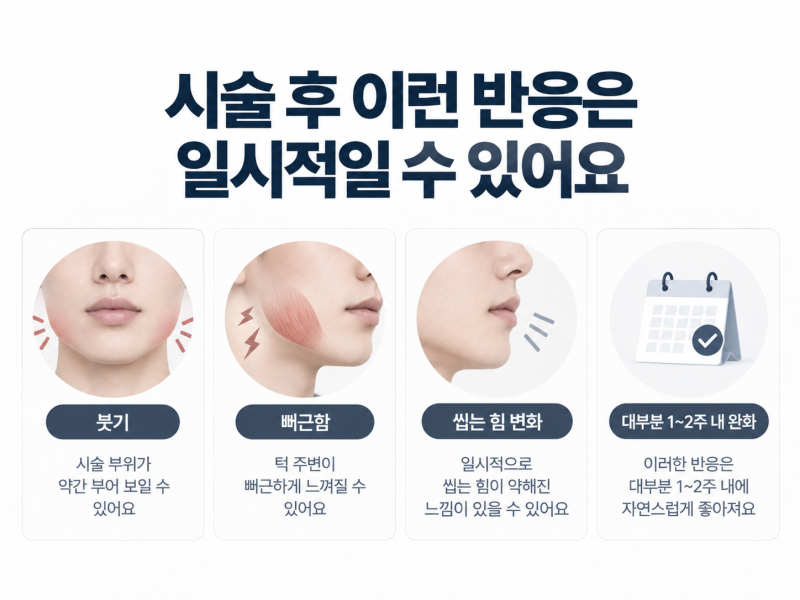
Temporary reactions after treatment: mild swelling, jaw stiffness, weaker chewing. Most ease naturally within 1–2 weeks.
After treatment, you may notice bruising or swelling, a stiff or achy feeling when chewing, or a temporary sense that your bite is weaker.
Also, in faces with less cheek fat and prominent cheekbones, the reduction in muscle volume can make cheek hollowing more noticeable.
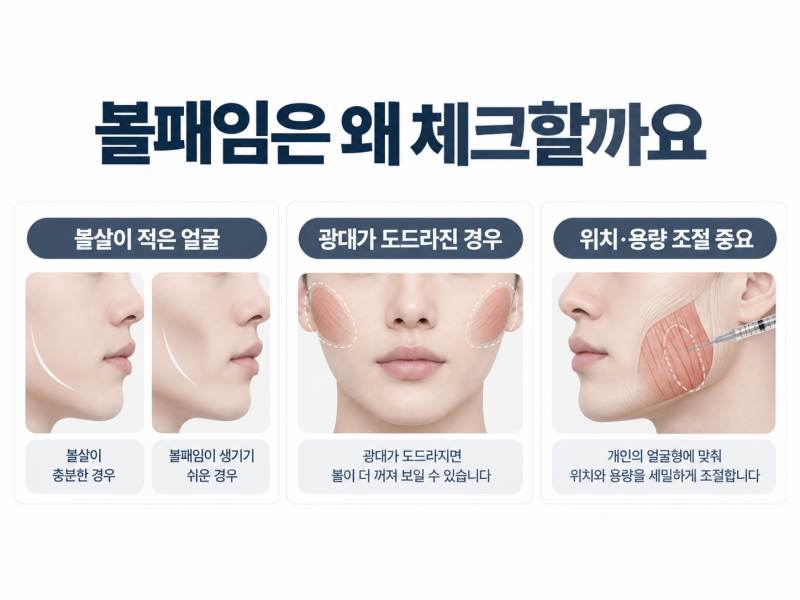
Why check for cheek hollowing: faces with little cheek fat or prominent cheekbones may look sunken, so position and dose are finely adjusted.
Depending on where it is injected, the movement of the corners of your mouth when you smile may feel unnatural. For this reason, it's more important to check your face shape and muscle area first than to inject a large amount.
If discomfort is significant or lasts longer than expected, don't just wait it out. Please check with the medical institution where you received the treatment.
Do men need to get retreatment sooner?
Being male doesn't automatically shorten the interval between retreatments. In fact, since the dose used per session may be higher, it's important not to repeat treatment too frequently.
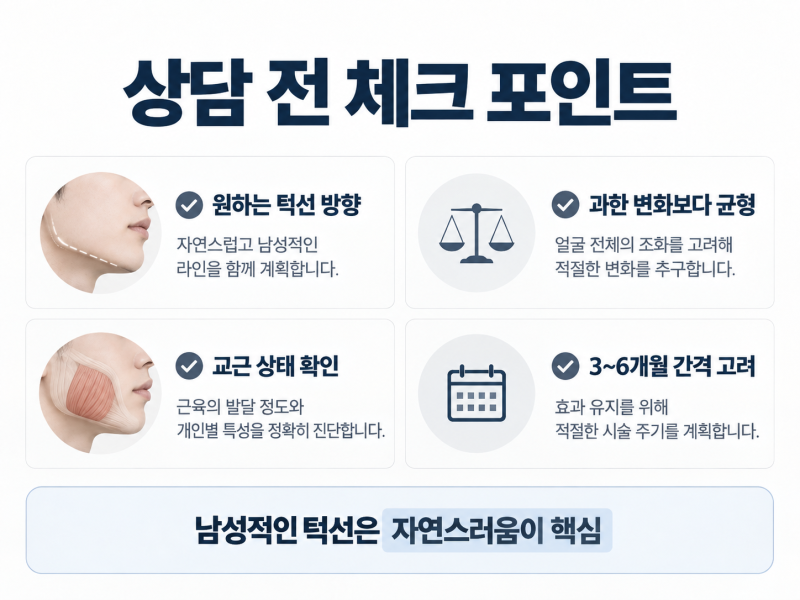
Pre-consultation checklist: desired jawline, balance over drastic change, masseter condition, 3–6 month intervals. Naturalness is key.
Retreatment is typically spaced about 3 to 6 months apart. If you've recently had Botox in another area, please let us know the product, timing, and dosage during your consultation.
Ultimately, the key to men's square jaw Botox isn't a formula like “men need X units.” It's first determining whether your jaw looks wide because of muscle or bone, and then adjusting muscle strength only as much as needed to achieve the impression you want, rather than making your face as small as possible. That way, your lower face can look refined while your natural appearance remains.
-Related Reading-
[Cobblestone Chin Botox: The Real Reason the Chin Tip Looks Bumpy?] (blog link)
This post is a medical advertisement written by the clinic for the purpose of providing medical information, and it complies with Article 56(1) of Korea's medical advertising regulations. Results may vary depending on individual constitution and health condition, so please make treatment decisions after thorough consultation with your medical team.
Frequently Asked Questions
Why does a man's square jaw look wide?
A well-developed masseter muscle can make the jaw look wide. The masseter is the muscle used to chew and clench your teeth. However, a wide-looking jaw isn't always caused by muscle alone, so it's also worth checking whether bone or cheek fat is the cause.
Will square jaw Botox make a man's face look too slim?
Not necessarily. The goal of treatment for men isn't always to make the face smaller. It can also aim to reduce the bulk of an overdeveloped muscle so that the natural male jawline looks more defined. Results are best judged by whether the lower face looks naturally refined from both the front and side, rather than by face width alone.
Do men need more units of square jaw Botox?
Not necessarily. Men often have larger masseter muscles, so the dose tends to be higher, but the actual amount is determined more by muscle size and the balance between the left and right sides than by gender. For both sides combined, about 50 to 100 units is commonly considered. There's no need to set a high dose from the start.
When will square jaw Botox results appear?
Your jawline usually doesn't change right away. Because muscle strength decreases first and volume changes follow, results tend to appear gradually over time. Gender doesn't significantly affect when results appear or how long they last; individual muscle characteristics and habits have a greater influence.
Do I need to get my temples treated with square jaw Botox as well?
Not everyone needs this. For cosmetic purposes, treatment is usually centered on the masseter below the ears. However, if you habitually grind or clench your teeth, the temporalis muscle near the temples may also be evaluated.
Are side effects of square jaw Botox more severe in men?
No. The types of side effects don't differ significantly between men and women. Bruising, swelling, a stiff feeling when chewing, and a temporary sense of weaker chewing strength may occur. If discomfort is significant or lasts longer than expected, please check with the medical institution where you were treated.