2026-11-26
Nonhyeon Station Abdominal Fat-Dissolving Injections vs. Liposuction: Which Is Right for Your Belly Fat?
Compares abdominal fat-dissolving injections and liposuction, explains subcutaneous vs. visceral fat, and covers recovery, side effects, and key factors to consider.

Woman touching her waist. Text: “Stubborn belly fat calls for a different approach — abdominal fat-dissolving injection vs liposuction.”
Many people find that no matter how much they diet, their abdomen just won't slim down. If you've tried changing your meals and working out but your lower belly or flanks still look the same, you may start looking into abdominal fat-dissolving injections or abdominal liposuction at Nonhyeon Station.
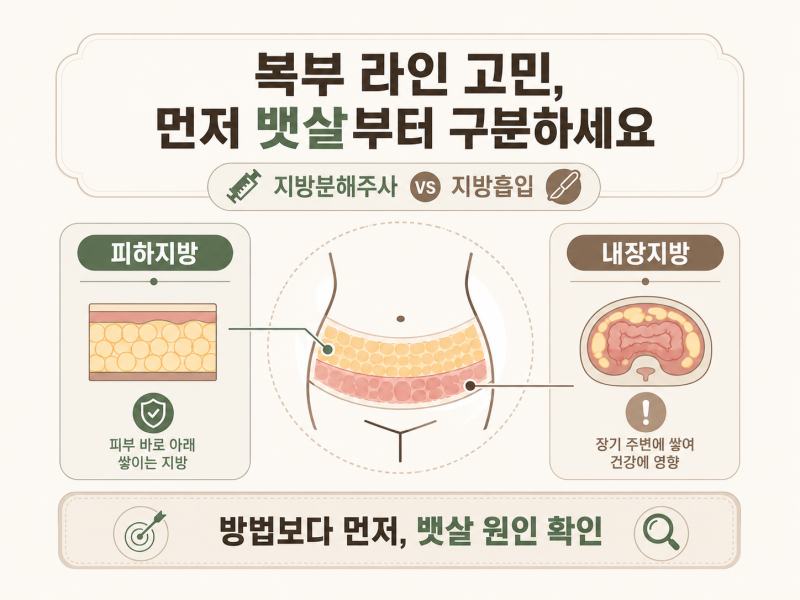
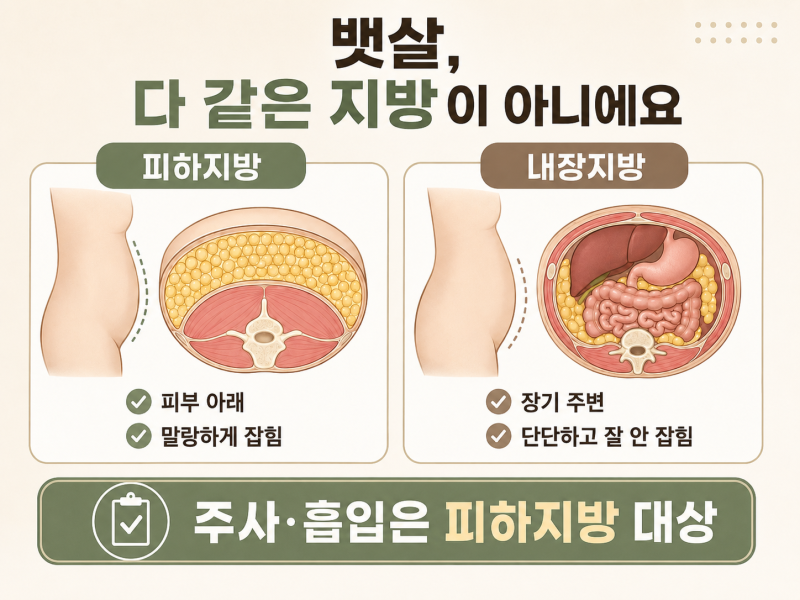
Check your belly fat type first: subcutaneous fat lies just under the skin; visceral fat builds up around organs and affects health.
However, there's something you should know first: not all belly fat is the same. Abdominal fat is broadly divided into subcutaneous fat, which lies just beneath the skin, and visceral fat, which accumulates around the internal organs.
Subcutaneous fat is soft and pinchable; visceral fat sits firm around organs. Injections and liposuction target subcutaneous fat.
Both abdominal fat-dissolving injections and abdominal liposuction target subcutaneous fat. This means that if visceral fat is the main cause, you may not see the results you expected.
What is abdominal fat-dissolving injection?
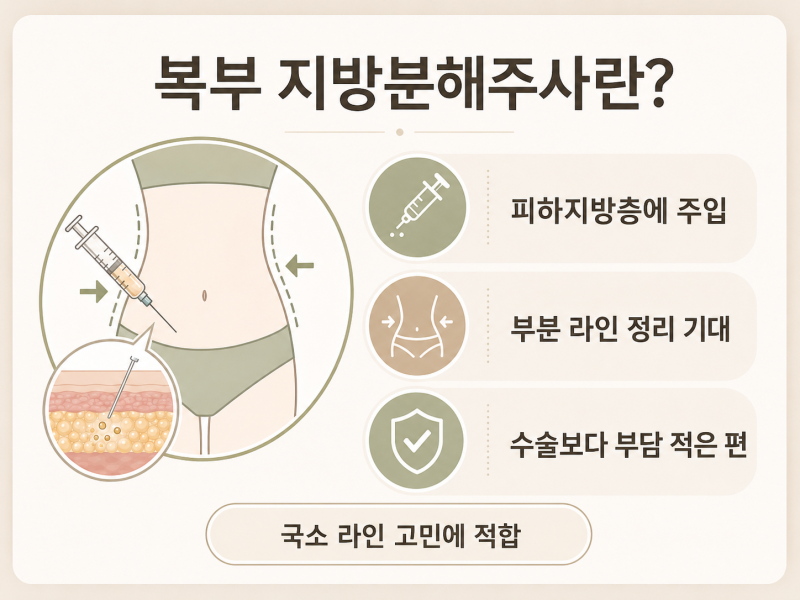
What is an abdominal fat-dissolving injection? It is injected into the subcutaneous fat layer to refine local contours, with less burden than surgery.
Abdominal fat-dissolving injection is a procedure in which an agent that promotes fat breakdown is injected into the subcutaneous fat layer of the abdomen, aiming to reduce fat volume and refine the body's contours.
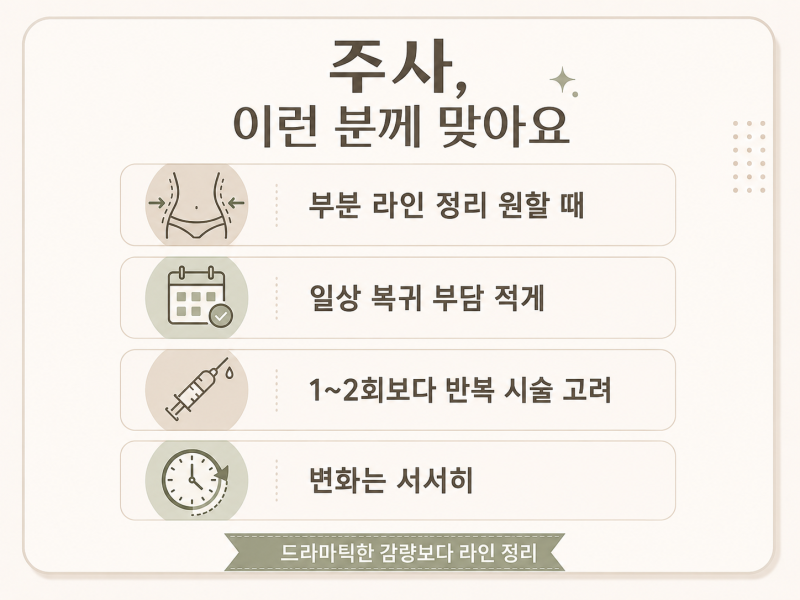
Injections suit those who want to refine specific areas, return to daily life easily and plan repeat sessions; change is gradual, not dramatic.
Because it isn't surgery, results vary from person to person, but it places less of a burden on daily life than surgery does. That said, injections alone won't make belly fat disappear all at once. The abdomen is an area where fat is spread more widely than on the face or upper arms, so it's better to view treatment as gradually refining the upper abdomen, lower abdomen, and flanks, rather than expecting dramatic changes from just one or two sessions. Depending on individual condition, repeat treatments every 2 to 4 weeks are often considered.
What is abdominal liposuction?
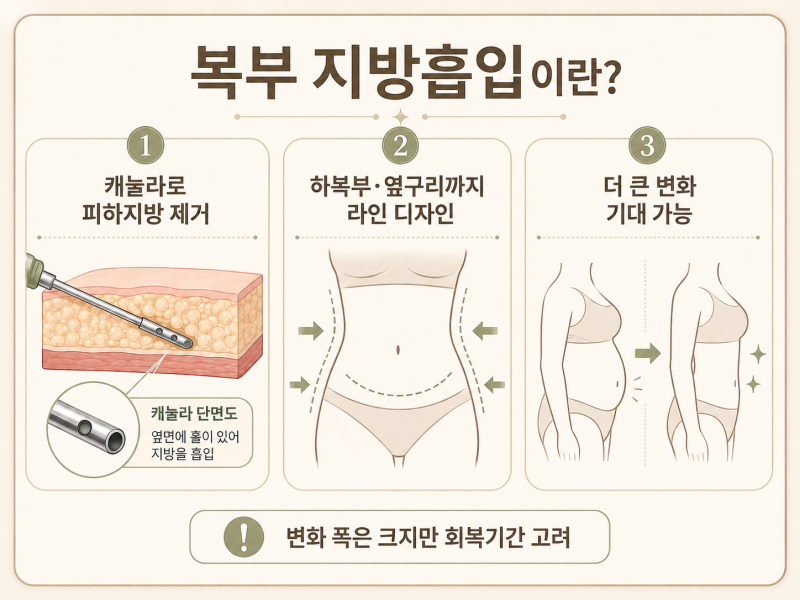
Liposuction uses a cannula to remove subcutaneous fat and shape the lower belly and flanks; bigger change, but recovery time applies.
Abdominal liposuction is a surgical procedure that uses a thin tube called a cannula to directly remove subcutaneous fat beneath the skin. It isn't limited to the front of the abdomen. Satisfaction tends to be higher when the overall contour is considered, including the lower abdomen, the area around the navel, the belt line, the flanks, and the area just above the pubic bone.
In some cases, it can produce a greater change than fat-dissolving injections. However, because it is surgery, swelling, bruising, recovery time, and the possibility of side effects must also be taken into account. Rather than simply removing as much fat as possible, what matters most is which layer is treated and how evenly the fat is removed.
How can I tell whether my belly fat is subcutaneous or visceral?
The simplest method is to relax your abdomen, let it push out slightly, and pinch your belly fat with your hand.
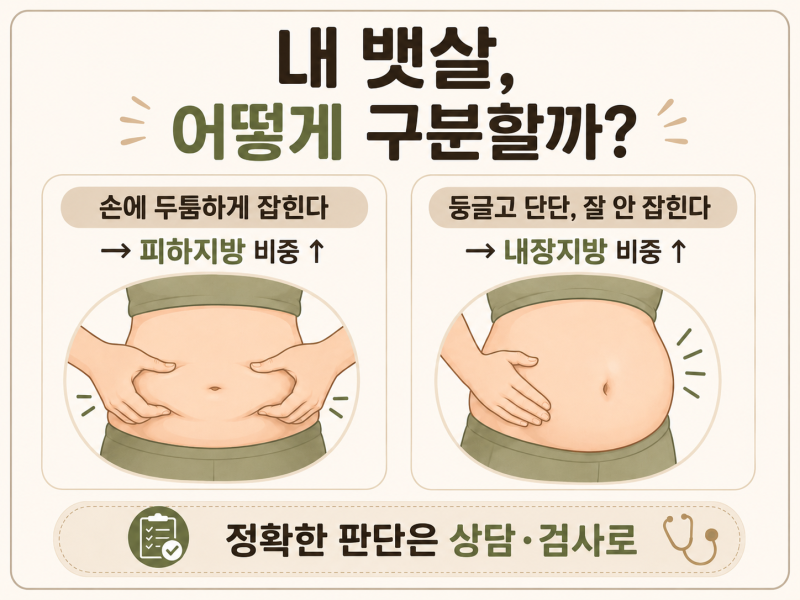
Thick, pinchable belly: more subcutaneous fat. Round, firm, hard to pinch: more visceral fat. Accurate assessment needs consultation and tests.
If you can pinch a thick, soft layer of fat, subcutaneous fat may make up a larger share of your belly fat. In this case, fat-dissolving injections or liposuction may help improve your contours.
On the other hand, if your whole abdomen sticks out round like a ball and feels firm, with little soft fat to pinch, visceral fat may make up a larger share. In this case, injections or liposuction alone have their limits, and managing visceral fat through diet changes and aerobic exercise may be needed first.
Of course, the most reliable way to get an accurate assessment is through a body composition analysis, an ultrasound exam, and consultation with a medical professional.
What's the difference between fat-dissolving injections and liposuction?
Abdominal fat-dissolving injections place little strain on recovery and are well suited to localized contour refinement. They are relatively accessible for those who find surgery daunting or who don't want their daily life significantly disrupted. However, results tend to appear gradually, and repeat treatments are often needed.
Abdominal liposuction can deliver more noticeable changes in contour. However, because it is surgery, it requires a recovery period, and swelling or bruising may occur.
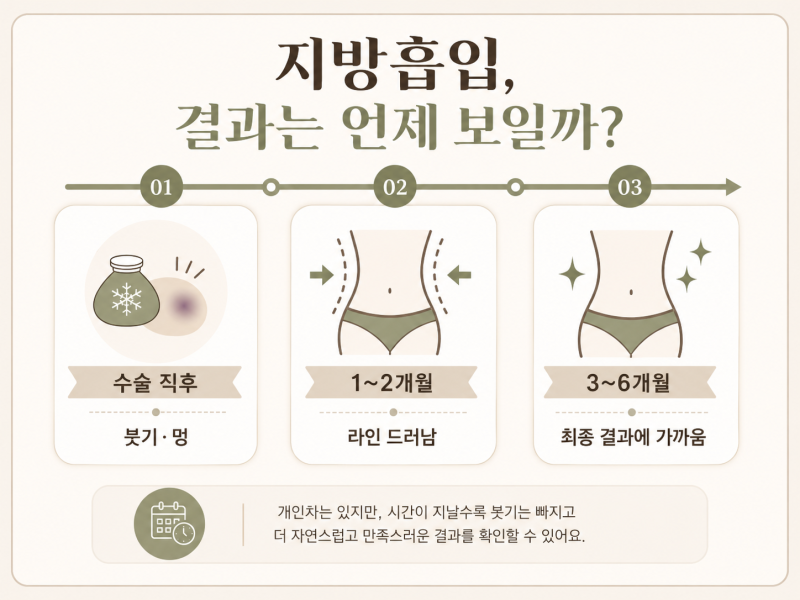
Liposuction timeline: swelling and bruising right after, contours show at 1–2 months, near-final result at 3–6 months. Varies by person.
Typically, rather than right after surgery, contours begin to become visible about one to two months later. By three to six months, the tissue softens and the results get closer to the final outcome.
What side effects should I watch out for?
Abdominal fat-dissolving injections may cause swelling, bruising, and pain after the procedure.
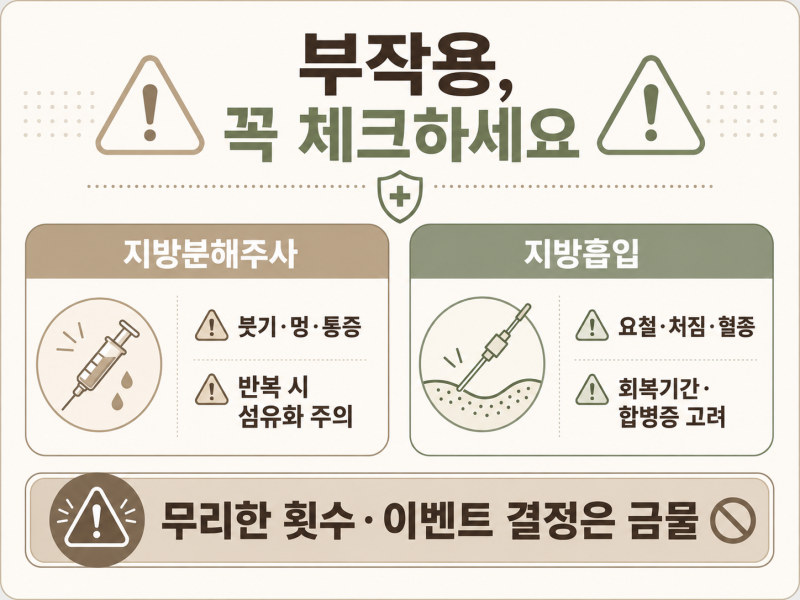
Side effects – injections: swelling, bruising, pain, fibrosis if repeated. Lipo: unevenness, sagging, seroma. Avoid excess sessions or promo-based choices.
In most cases these effects are temporary. However, with repeated treatments, fibrosis such as firm lumps or unevenness can develop, so it's best to avoid pushing the intervals or number of sessions too far.
Abdominal liposuction can cause contour irregularities, skin sagging, hematomas, seromas, and infection.
Although rare, because the abdomen is close to internal organs, the possibility of serious complications such as peritoneal injury should also be kept in mind.
That's why, rather than deciding based on price or promotions alone, it's important to consult a medical professional who has a solid understanding of abdominal anatomy and sufficient surgical experience before considering abdominal liposuction.
Do age and childbirth experience also affect the results?
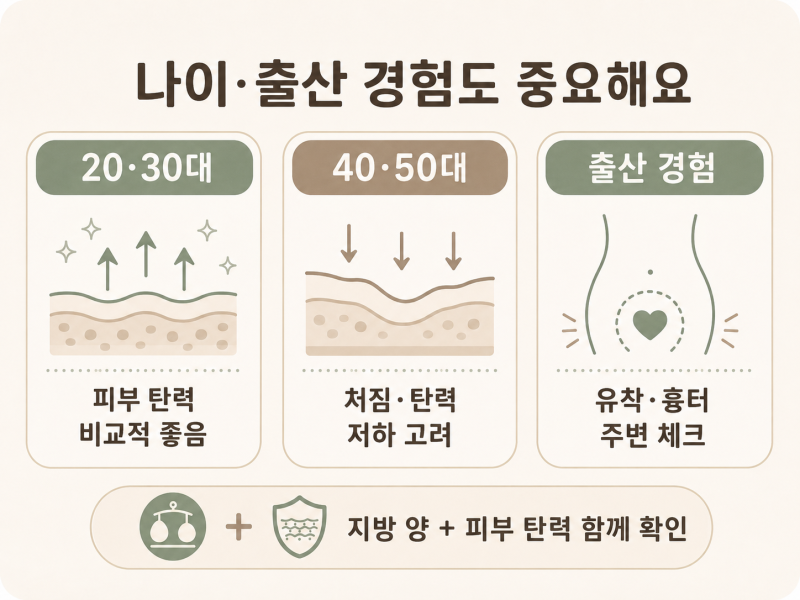
Age and childbirth matter: 20s–30s usually have better skin elasticity, 40s–50s may sag; after childbirth, check adhesions and scars.
Yes, they can. In their 20s and 30s, skin tends to be relatively elastic, so the skin contracts well after fat is removed. On the other hand, for those in their 40s or 50s, or those who have given birth, factors such as reduced skin elasticity, abdominal sagging, and possible adhesions around a C-section scar should be considered.
In such cases, simply reducing fat may not complete the abdominal contour you're hoping for. It's important to look at not only the amount of fat, but also skin elasticity, the degree of sagging, and the condition of the abdominal muscles.
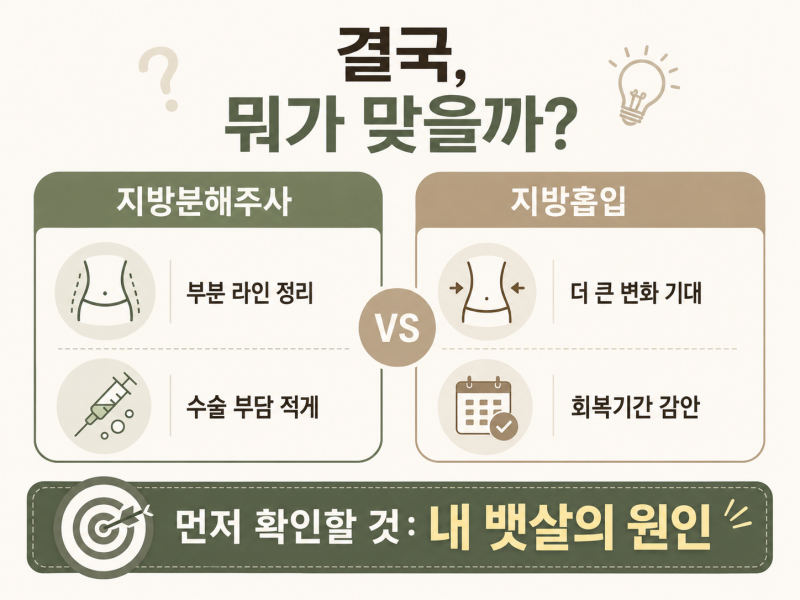
Injections: partial contouring, less burden. Liposuction: bigger change, accept recovery time. First, check what causes your belly fat.
Abdominal fat-dissolving injections are well suited to those who want partial contour refinement without the burden of surgery. Conversely, abdominal liposuction may be worth considering for those who want more distinct results and can accommodate the recovery period. However, neither method removes visceral fat.
So the first step is to determine “what is causing my belly fat.” The most suitable approach depends on whether you have more subcutaneous or visceral fat, and whether your skin elasticity is good enough.
Managing your abdominal contour isn't simply a matter of choosing between injections and liposuction. What matters is taking an accurate look at your body's condition and choosing the safest and most realistic option, without pushing yourself beyond what's reasonable.
This post is a medical advertisement written by the clinic for the purpose of providing medical information. It complies with Article 56, Paragraph 1 of the Medical Advertising Act. Results may vary depending on individual constitution and health status, so please make treatment decisions after thorough consultation with your medical provider.


Frequently Asked Questions
What is the difference between abdominal fat-dissolving injections and liposuction?
Fat-dissolving injections involve injecting an agent that promotes fat breakdown into the subcutaneous fat layer to achieve contour refinement, while liposuction is a surgical procedure that directly removes subcutaneous fat with a cannula. Injections place less strain on recovery but often require repeat sessions, whereas liposuction requires consideration of swelling and recovery time.
Is one abdominal fat-dissolving injection session enough?
Injections alone won't make belly fat disappear all at once. Rather than expecting major changes from just one or two sessions, it's best to view treatment as gradually refining the upper abdomen, lower abdomen, and flanks. Repeat treatments every 2 to 4 weeks are often considered, depending on individual condition.
Can visceral fat be removed with injections or liposuction?
No, neither method removes visceral fat. Because abdominal fat-dissolving injections and liposuction both target subcutaneous fat, results may be hard to see if visceral fat is the main cause. In such cases, diet changes and aerobic exercise may be needed first.
How can I tell whether my belly fat is subcutaneous or visceral?
The simplest method is to relax your abdomen, let it push out slightly, and pinch your belly fat with your hand. If you can pinch a thick, soft layer, subcutaneous fat may make up a larger share. If your abdomen is round and firm like a ball with little soft fat to pinch, visceral fat may be higher. For an accurate assessment, a body composition analysis, an ultrasound exam, and consultation with a medical professional are the safest options.
Do age and childbirth experience affect the results of abdominal procedures?
Yes, they can. In their 20s and 30s, skin tends to be relatively elastic, so the skin contracts well after fat reduction. For those in their 40s or 50s, or those who have given birth, reduced skin elasticity, abdominal sagging, and possible adhesions around a C-section scar should be taken into account.
What side effects can occur after abdominal fat-dissolving injections?
Swelling, bruising, and pain may occur after the procedure, and these are usually temporary. However, with repeated treatments, fibrosis such as firm lumps or unevenness can develop, so it's best to avoid pushing the intervals or number of sessions too far.