2026-10-22
Rejuran Healer vs. HB and i: Key Differences Explained | Banpo Dermatology
A clear comparison of Rejuran Healer, HB, and Rejuran i, covering the PN ingredient, pain levels, eye-area use, session planning, and aftercare tips.
A woman touching her cheek, with the text: "If pain made you hesitate, start by choosing your Rejuran type."
Does your makeup keep lifting?
Does your face feel tight soon after washing?
Your surface looks oily, but the skin underneath is dry,
and some days your skin just looks dry and lackluster.
No matter how much moisturizer you layer on,
it only helps for a moment, which is frustrating.
When you start researching Rejuran,
you'll see several names like Healer, HB, and i,
so it's easy to get confused about which one to choose.
There are also many stories about it being painful,
which can make it hard to book without hesitating.
Hello, this is Dojagi Clinic, a dermatology clinic in Banpo.
Today, let's look at a question we hear constantly in consultations:
what's the difference between Rejuran Healer and the other types?
I'll break it down simply for you.
To start with the bottom line,
all three are in the same ingredient family,
but the right type for you depends on your pain tolerance,
the treatment area, and the results you want.
Knowing your current skin condition first
makes choosing much easier.
What kind of injection is Rejuran?
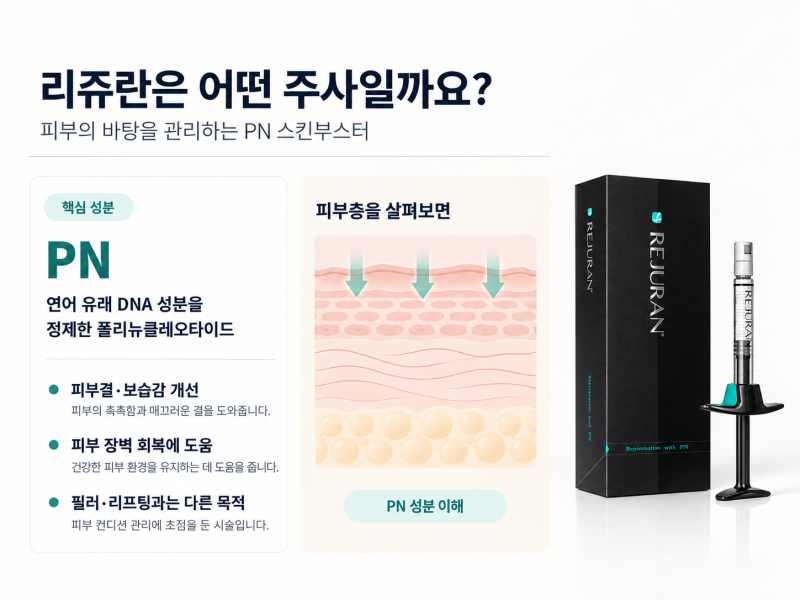
Rejuran's main ingredient is a substance called PN.
It's made of DNA fragments obtained from salmon
that have been cleanly purified.
It's used to help the skin recover and regenerate,
making it an ingredient focused on skin repair.
Since it's known to be well tolerated by the body,
it's also a popular injection for first-timers,
who find it relatively easy to begin with.
PDRN, commonly called the salmon injection,
also comes from salmon DNA,
but it's broken into smaller fragments.
Rejuran's PN, on the other hand, has longer fragments,
so it stays in the skin a little longer.
When injected directly into the dermis,
skin texture and hydration can become more balanced
and the weakened skin barrier
may begin to recover.
Usually around 1 to 2 weeks,
as the raised areas settle down,
many people describe feeling that their skin has become
smoother and more hydrated.
That said, it isn't meant to add volume
or lift sagging facial contours.
If you think of it as an injection that strengthens
your skin's underlying condition, it's easier to understand.
Rather than an instant transformation,
it's closer to a feeling of your skin
gradually getting stronger as sessions add up.
That's why, among the many types of skin boosters,
people who want to focus on skin regeneration
often choose it.
What's the difference between Healer and HB?
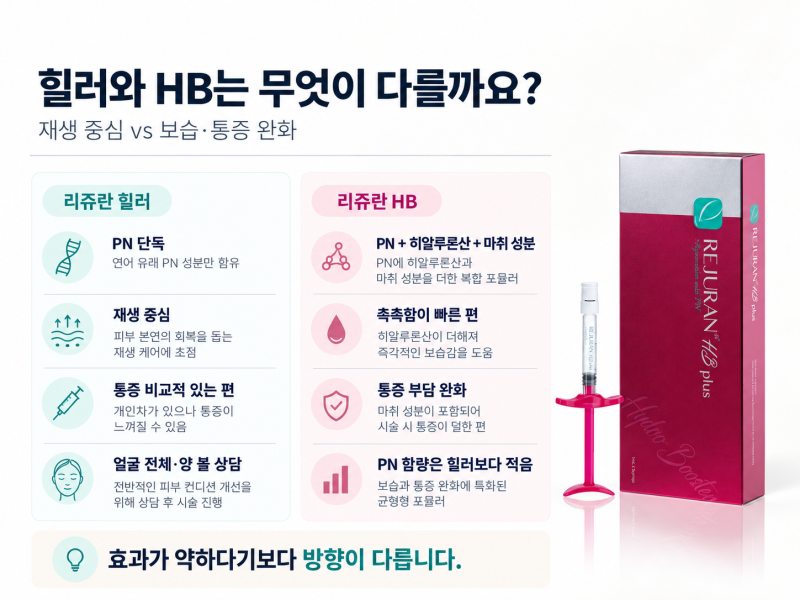
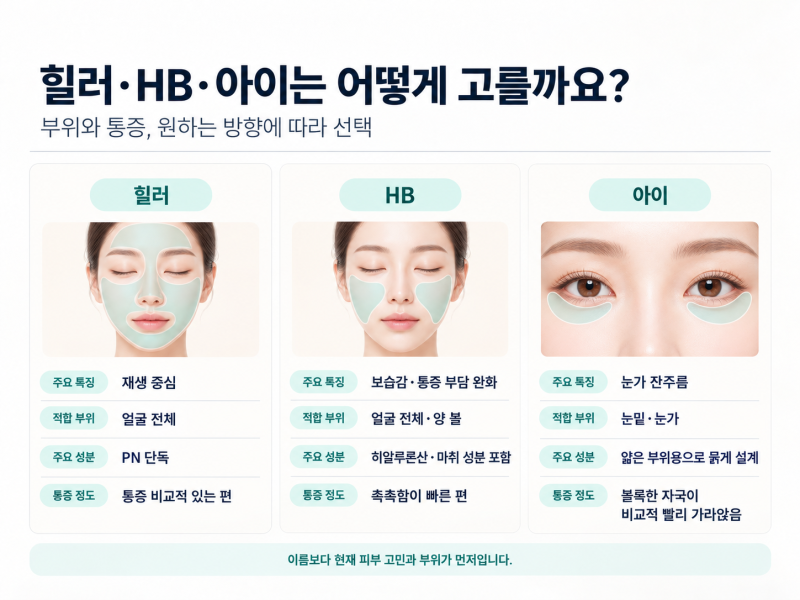
Healer is the basic type, containing only PN.
It's often applied across the entire face,
and since it focuses on regeneration,
it tends to cause quite a bit of discomfort.
Whether treatment focuses mainly on both cheeks
or covers the whole face,
the amount used also changes.
Rejuran HB is a version that also contains hyaluronic acid
and a numbing ingredient.
It's noticeably less painful,
and the moisturized feeling tends to come on quickly after treatment.
That said, its PN content is lower than Healer's.
It's not that it's less effective;
it's more that the focus is a little different.
If skin regeneration is your priority, choose Healer.
If pain is a concern or you want more hydration,
HB is worth considering. That's how we help you decide.
Many people who once found it too painful
and said they could never go through it again
often restart with HB.
For other areas, such as sunken scars,
where more firm support is needed,
we sometimes use the S type, which has higher viscosity.
Does the eye area need separate treatment?
The under-eye and eye area is
one of the thinnest areas of skin on the face.
That's why wrinkles tend to appear early,
and if a high-viscosity product is injected,
raised marks may linger for a long time.
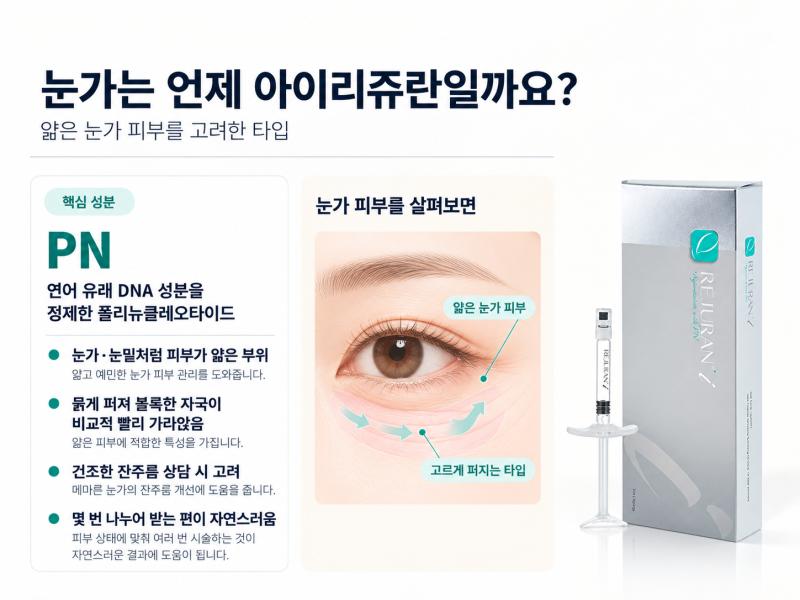
So for the eye area, we mainly use a thinner formulation
called Rejuran i.
It spreads evenly, even on thin skin,
and raised marks tend to settle relatively quickly.
For under-eye wrinkles or dry fine lines
that don't smooth out well with Botox,
these are concerns we often discuss in consultations.
For the eye area, too, we usually recommend
spreading treatments over several sessions rather than doing just one.
Eye-area fine lines play a different role than Botox or lifting,
so depending on your condition,
we sometimes plan them together.
Does it hurt a lot? How many sessions do I need?
To be honest,
Rejuran can be quite painful.
When the product is injected to fill the skin,
many people feel a dull, aching pressure.
So we apply numbing cream thoroughly
and, if needed, use a machine injector
to help reduce the discomfort.
However, with machine injection,
some of the product may leak to the surface.
Hand injection is more painful,
but there's less product loss,
and the depth and amount can be finely adjusted for each area.
Which method is best
is decided together based on your pain sensitivity.
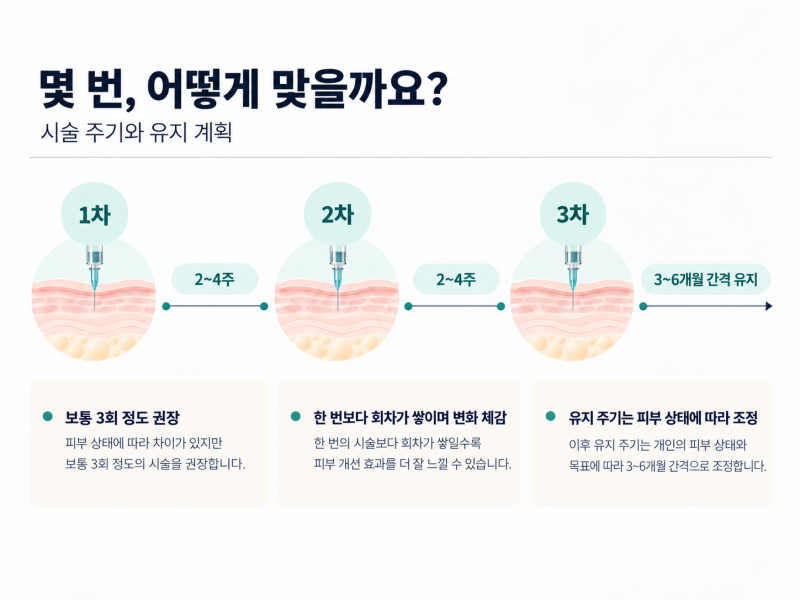
Rather than doing just one session,
a course of about three sessions spaced 2 to 4 weeks apart
is what we usually recommend.
After that, the Rejuran maintenance schedule depends on your skin's condition,
with treatments continuing every 3 to 6 months.
The treatment site may show raised bumps
or bruising that can last a few days,
and some people have needle marks that last one to two weeks.
If you have an important event coming up,
be sure to schedule with plenty of time to spare.
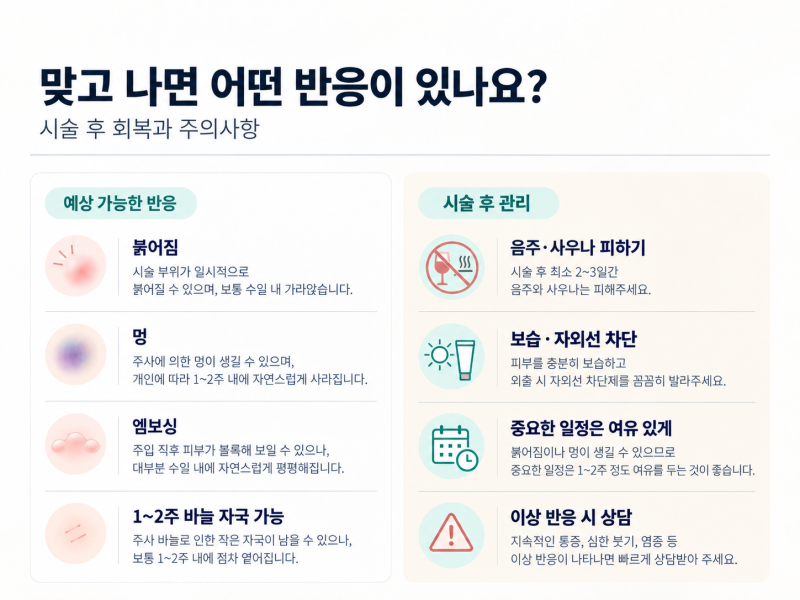
For a few days after treatment, avoid things like drinking alcohol or going to the sauna
that raise the heat in your face,
and keep up with moisturizing and sun protection.
Allergic reactions are rare, but they can occur.
So right before a big event like a wedding,
it's best to avoid getting treated for the first time.
Would it work for me?
People with thin, dull-looking skin
or underlying dryness that makes their makeup keep lifting,
and those with both fine lines and sensitivity,
tend to notice the changes more.
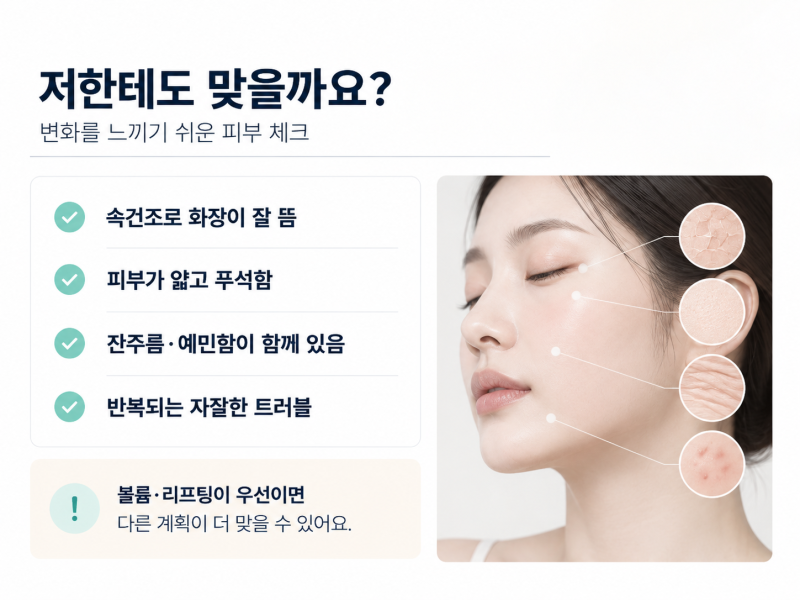
We also often recommend it for skin that keeps
developing minor, recurring breakouts.
On the other hand, if you have few skin concerns
or if volume and lifting are your top priorities,
another approach may be a better fit.
If firmness is also a concern,
we sometimes plan it together with radiofrequency lifting in separate sessions.
This is because it can help replenish skin
that tends to dry out after heat treatments.
At Dojagi Clinic, we first carefully check your skin,
then decide the type, treatment areas,
and number of sessions together with you.
Even with the same Rejuran, tailoring it to your skin
is what makes the biggest difference in satisfaction.
We review your skin's response at each session
and adjust the next plan accordingly.
Rather than focusing on the name, first check
what your skin needs right now.
If you bring a list of your concern areas,
your consultation will go much more smoothly.
Rather than choosing based only on what others say worked well,
finding a method that fits your skin's condition
is the most reliable starting point.
※ After treatment: redness, swelling, bruising
raised bumps may appear,
and in rare cases, allergic reactions can occur.
Results and recovery vary from person to person.
This post is a medical advertisement written by this clinic for the purpose of providing medical information. It complies with Article 56(1) of the Medical Service Act. Results may vary depending on individual constitution and health conditions, so please make treatment decisions after thorough consultation with your medical team.
Frequently Asked Questions
How do Rejuran Healer and HB differ?
Healer is the basic type containing only PN, while HB is a version that also includes hyaluronic acid and a numbing ingredient. HB is noticeably less painful and the moisturized feeling tends to come on quickly, but its PN content is lower than Healer's.
What is the main ingredient of Rejuran?
Rejuran's main ingredient is PN, a purified form of DNA fragments derived from salmon. It is used to support skin repair and regeneration. Compared with PDRN, often called the salmon injection, PN has longer fragments and tends to stay in the skin a little longer.
Does Rejuran hurt a lot?
Rejuran can be fairly painful, and many people feel a dull ache as the product fills the skin. Numbing cream is applied thoroughly, and a machine injector may be used to reduce discomfort when needed, though with machine injection some product may leak to the surface.
How many Rejuran sessions do I need?
A course of about three sessions, spaced 2 to 4 weeks apart, is usually recommended. After that, maintenance treatments are generally given every 3 to 6 months, depending on your skin's condition.
Which Rejuran is used around the eyes?
For the eye area, we mainly use Rejuran i, a thinner formulation. The skin under and around the eyes is very thin, so a high-viscosity product can leave raised marks that last a long time. For the eye area too, we usually recommend spreading treatments over several sessions rather than just one.
What should I keep in mind after treatment?
Raised bumps or bruising may remain at the treatment site for several days, and needle marks may last one to two weeks in some cases. For a few days after treatment, avoid activities that raise your body heat, such as drinking alcohol or going to the sauna, and keep up with moisturizing and sun protection. Allergic reactions are rare but possible, so avoid having your first treatment right before an important event.