2026-11-27
Sauna Detox: Does Sweating Really Flush Out Toxins?
Does sauna sweating really flush toxins out of your body? This article explains why post-sauna refreshment isn't detox, how heat affects skin, and tips for enjoying saunas safely.


A smiling woman in a bathrobe in a sauna, with the text: "Sauna detox – the real benefits lie elsewhere."
Step out of the sauna after a good, sweaty session and both your body and mind feel refreshed. That’s why people often call it “sauna detox.” But do waste products really leave the body through sweat? And is that intense heat actually okay for your skin?
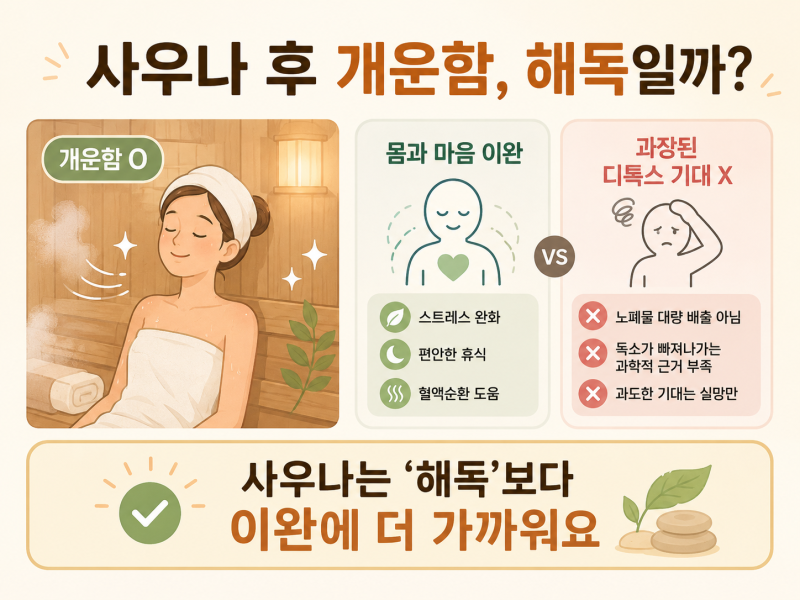
Is post-sauna refreshment detox? It brings relaxation, stress relief and rest, but no mass waste removal; it's closer to relaxation.
Many people wonder whether the equation “refreshed after sauna = detoxed” really holds up, and whether frequent visits could harm their skin. Today, we’ll sort out both questions at once. Once you understand the facts, you’ll be able to enjoy your sauna time even more wisely.
Does sweating also flush waste out of the body?
It’s true that you feel lighter when you leave the sauna. But it’s hard to credit that refreshed feeling to waste elimination. Once you know what sweat actually is, the reason becomes clear.
What is sweat? Mostly water, with small amounts of electrolytes and only trace waste. Sweat is water that lowers body temperature.
Sweat is essentially water that your body produces to cool itself down. It’s mostly water, with a small amount of electrolytes such as sodium mixed in. Heavy metals and waste products do leave through sweat, but only in trace amounts. Compared with the liver and kidneys, which process toxins in the body, that amount is negligible.
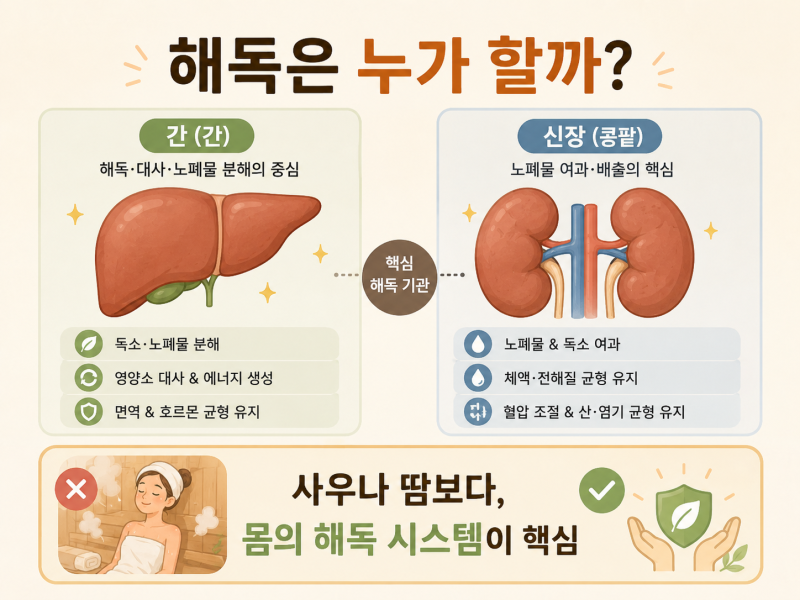
Who detoxifies? The liver breaks down toxins and the kidneys filter waste. The body's own detox system matters more than sauna sweat.
In fact, when it comes to eliminating waste, sweat produced during physical exercise is reported to be slightly more effective than sweat from sitting still in a hot sauna. Still, the difference isn’t large enough to be called detox.
So is a sauna pointless?

Saunas still have value: muscle relaxation, stress relief and restful downtime. Weight loss after a sauna is mostly water, not fat.
A sauna may not physically remove toxins from your body, but the relaxation it provides has real value. Muscles loosen in the warm air and your mind clears. That alone relieves stress, acting as a kind of mental detox.
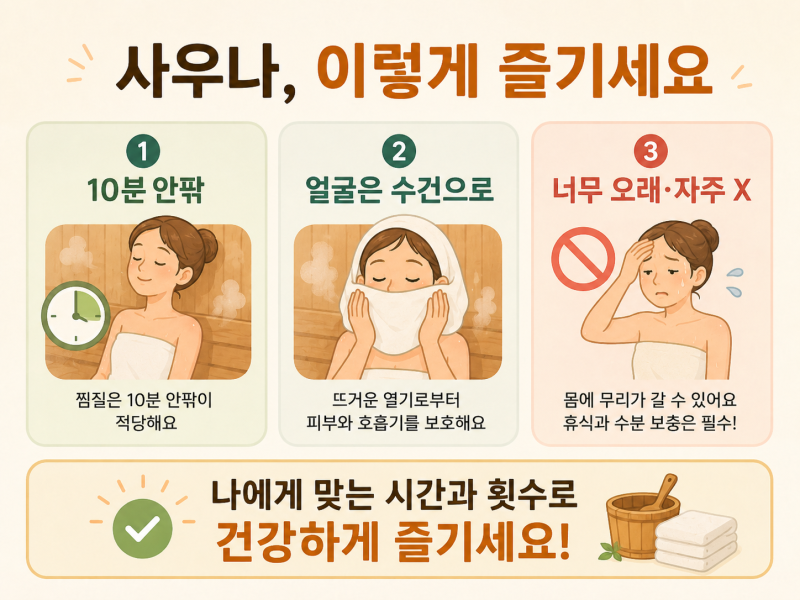
How to enjoy a sauna: stay about 10 minutes, cover your face with a towel, and don't go too long or too often. Rest and rehydrate.
The same goes for the weight loss you might notice. A slight drop on the scale right after a sauna simply reflects temporary water loss, and drinking water brings it right back. Since no fat has been lost, it can’t really be considered a diet effect.
Is the heat good or bad for your skin?
After a sauna, you’ve probably noticed your skin looking brighter and rosier. This is a temporary effect: blood vessels widen and circulation increases. It doesn’t mean your skin has actually become healthier underneath.
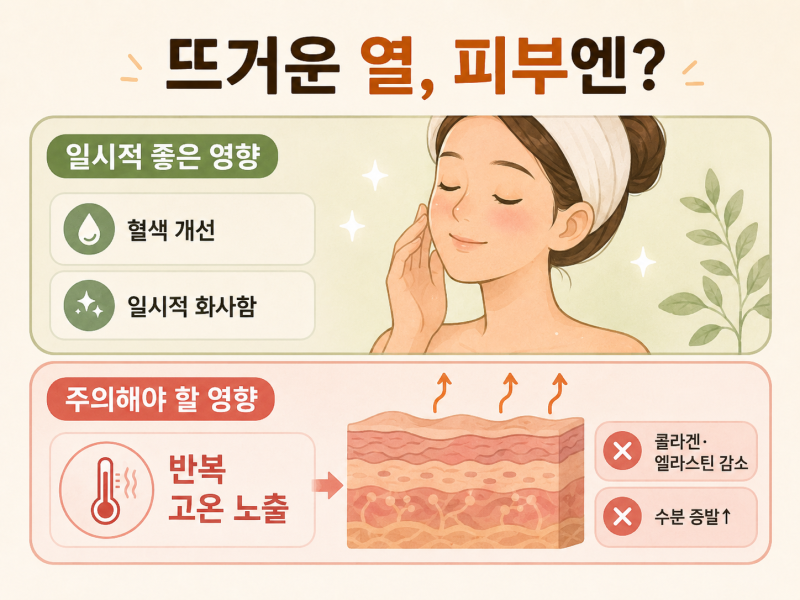
Heat and skin: a temporary glow and better color, but repeated high heat means less collagen and elastin and more moisture loss.
The problem arises when you’re repeatedly exposed to intense heat for long periods. Collagen and elastin, which keep skin firm and elastic, can gradually break down as high heat activates the enzymes that degrade them. Just as aging caused by UV exposure is called photoaging, skin aging caused by heat is known as thermal aging.
Right after exposure to high heat, moisture in the skin can evaporate even faster, temporarily weakening the skin barrier. If this happens repeatedly, skin can become more sensitive to irritation, and its elasticity may suffer. This matters even more if your face flushes easily or your skin is generally sensitive.
Does sweating more mean better detox?

More sweat = more detox? Sweat signals rising body heat, varies by condition and doesn't track detox. Focus on comfort, not sweat volume.
After sweating buckets, it’s easy to feel as though your body has been cleansed from the inside, so you might assume the more you sweat, the greater the detox effect. But the amount of sweat and the detox effect are not proportional. Heavy sweating simply signals that your body temperature has risen significantly. It doesn’t mean more toxins are leaving your body.
How much you sweat can vary widely depending on your number of sweat glands, how you feel that day, and what you’ve been drinking, such as caffeine or alcohol. So rather than focusing on how much you sweated, pay more attention to how comfortable your body feels after the sauna.
Does the type of sauna make a difference?
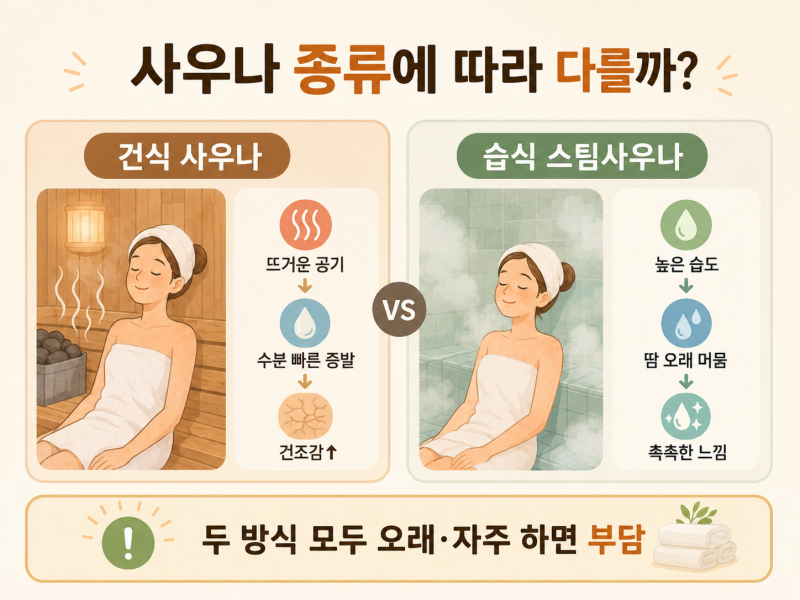
Dry vs. steam sauna: dry heat evaporates moisture fast and feels drying; steam keeps skin moist. Either is a strain if too long or frequent.
Dry saunas and wet steam saunas, the two most common types, differ right from how they transfer heat. A dry sauna uses hot air to quickly evaporate moisture from the skin’s surface. A steam sauna, with its high humidity, keeps sweat from drying and lets it linger on the skin. As a result, skin tends to feel drier after a dry sauna, while a steam sauna leaves it feeling moist for longer.
However, both types can strain the skin barrier if you’re exposed repeatedly for long periods. Controlling how long and how often you go is key, no matter which type you choose.
That said, there’s no need to avoid saunas altogether. Keep a few things in mind and you can enjoy them while minimizing the strain.
First, if you’re using a high-temperature sauna, keep each session short, around 10 minutes. Staying too long and going too often is what really builds up the strain. Lightly cover your face with a dry towel to reduce direct heat exposure.

Aftercare: rinse lukewarm, cool down slowly, moisturize, hydrate. Sensitive skin: less often; trouble-free skin: 1–2 short sessions a week.
When you’re done, rinse off the sweat with lukewarm water and let your heated body cool down gradually. Rinsing suddenly with very cold water can irritate the skin, so it’s safer to lower the temperature slowly.
Moisturizing and rehydration matter most. Right after a sauna, skin loses moisture quickly, so apply a moisturizer before it dries out, and drink plenty of water to replenish your body’s fluids.

Why the skin barrier weakens: heat drains moisture, the barrier loosens, then redness and itching appear. Extra care for sensitive skin.
If your skin is usually sensitive or your face flushes easily, it’s best to visit a little less often and take extra care to soothe your skin afterward. On the other hand, if you don’t have any particular skin issues, enjoying a short, light session once or twice a week is unlikely to be a burden. The most practical approach is to adjust flexibly based on how you feel.
In the end, a sauna is less a way to flush waste from the body and more a chance to step away from daily life for a while and let your body and mind rest. Rather than expecting dramatic detox results, think of it as a way to enjoy its relaxing effects while keeping sessions at a reasonable length and frequency.
With the tips shared today, once you understand what a sauna really does, you can enjoy a refreshing sauna session without worry.
This post is a medical advertisement written by the clinic for the purpose of providing medical information. It complies with Article 56, Paragraph 1 of the Medical Service Act. Individual constitution and health conditions may vary, so please make treatment decisions only after thorough consultation with your healthcare provider.

Frequently Asked Questions
Is the refreshed feeling after a sauna a sign that toxins have been flushed out?
No, the refreshed feeling after a sauna is hard to attribute to toxin elimination. Sweat is mainly water with a small amount of electrolytes such as sodium. Waste products leave only in trace amounts, which is negligible compared with the role of the liver and kidneys.
Does sweating a lot in a sauna increase the detox effect?
No, the amount of sweat is not proportional to the detox effect. Heavy sweating means your body temperature has risen significantly, not that more toxins are leaving your body. Sweat volume can also vary depending on the number of sweat glands, your condition that day, and what you drank.
Does losing weight after a sauna mean it helps with dieting?
No, weight lost right after a sauna is temporary water loss. It returns to normal once you drink water, and since no fat has been lost, it is hard to consider it a diet effect.
Why does your skin look brighter after a sauna?
The brighter look is a temporary change caused by blood vessels widening and circulation increasing. It doesn’t mean your skin has actually become healthier underneath.
Is there a difference between dry and steam saunas for your skin?
Yes, because they transfer heat differently, your skin will feel different. Dry saunas evaporate moisture quickly and can leave skin feeling dry, while steam saunas keep sweat on the skin longer, so skin tends to feel moist for longer. However, repeated long exposure to either type can strain the skin barrier.
How often and for how long should you use a sauna?
If you’re using a high-temperature sauna, keep each session short, around 10 minutes. If you don’t have any skin problems, enjoying a short session once or twice a week is generally not a burden. If your skin is sensitive, it’s better to lower the frequency.