2026-11-14
Thinking About Gangnam Rhinoplasty? Look at This Before Chasing a “Pretty Nose”
Before chasing a 'pretty nose,' check your facial balance, nose structure, skin thickness, cartilage options, and recovery schedule in Gangnam rhinoplasty.


When you’re considering rhinoplasty, it’s easy to know what a “pretty nose” looks like in photos. But once you try to picture it on your own face, there’s a lot more to think about.
Among people who come in for a Gangnam rhinoplasty consultation, the questions we hear most often are pretty much the same:
How high should the bridge be raised? Is it enough to just work on the tip? When will it look natural?

In reality, the first thing to look at in rhinoplasty isn’t the trendy shape. It’s the current structure of your nose.
The height of the bridge and the shape of the tip matter, but so do skin thickness, cartilage strength, nostril asymmetry, and even the width-to-length ratio of your face. All of these need to be examined together to determine the direction of the surgery.
Rather than a “pretty nose,” we first look at a nose that suits your face.
It’s also a good idea to bring celebrity photos or any photos you like, since they help explain the mood you’re after.
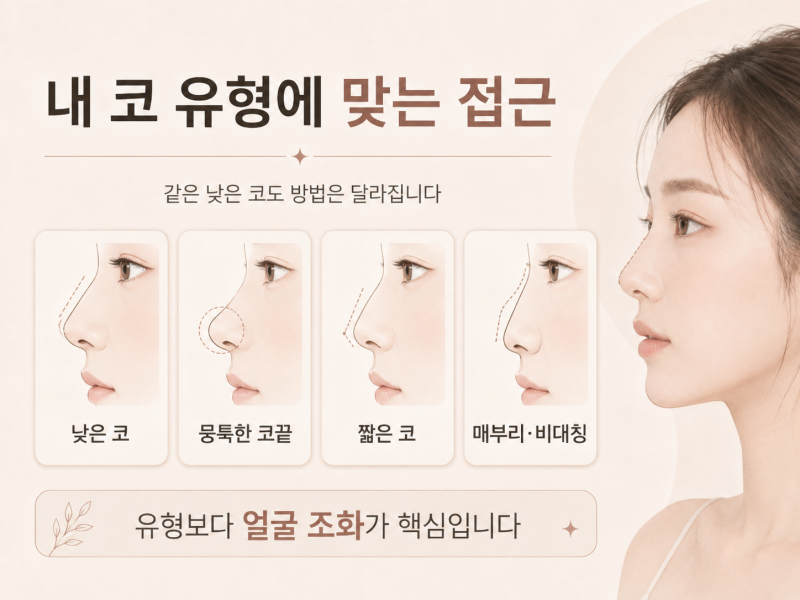
That said, applying the same bridge height and the same tip shape doesn’t necessarily produce the same look for everyone.
Whether your forehead protrudes, how much your mouth protrudes, and whether your face is long or short all change the impression your nose gives.
If your skin is thin, the implant’s contours need to be planned carefully so they don’t show through. If your skin is thick, subtle changes at the tip may look less pronounced than expected.
If you have functional concerns such as allergic rhinitis, nasal congestion, or a deviated septum, it’s a good idea to check the inside of your nose as well, rather than looking only at the cosmetic side.
So when you’re looking into Gangnam rhinoplasty, a far more important question than “How many millimeters should I raise it?” is:
How much would look natural on my face?
Do the bridge and the tip always have to be done together?
Not necessarily.
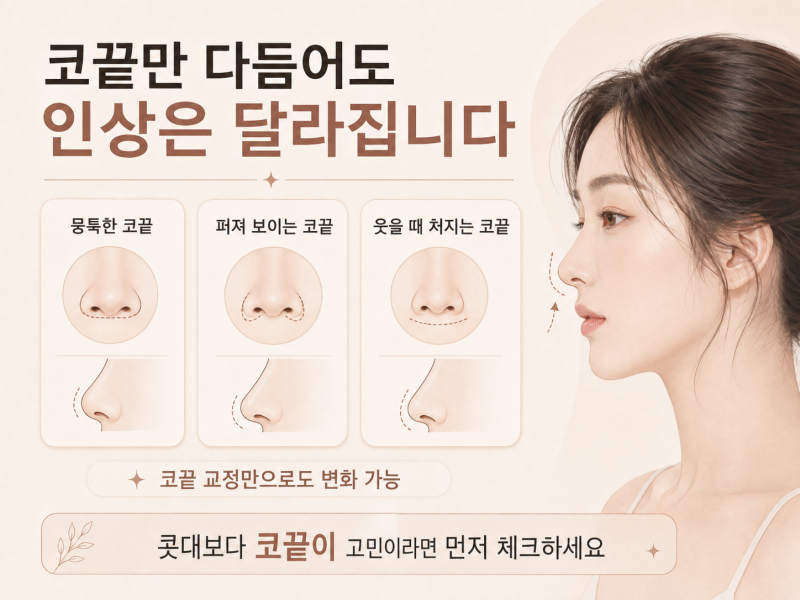
Some people have a bridge that isn’t very low, but their tip looks round and blunt, or it appears to droop when they smile.
In these cases, rather than changing the entire nose significantly, adjusting the support and direction of the tip may be an option.
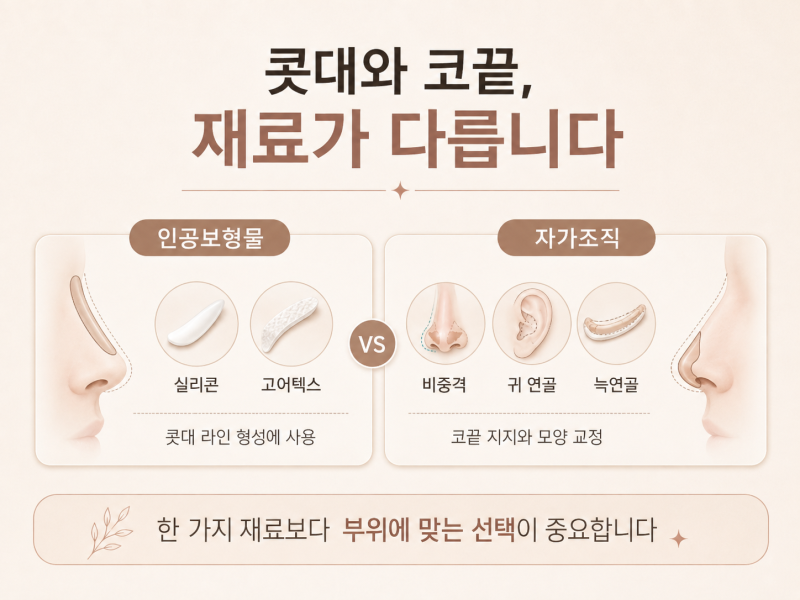
Tip rhinoplasty can use autologous cartilage, such as septal cartilage or ear cartilage.
Septal cartilage can be harvested from inside the nose. It has relatively strong support, so it’s used to raise the tip or shape its form.

Ear cartilage is flexible, so it can be used to softly reinforce the tip.
When the correction is extensive or there isn’t enough usable cartilage, rib cartilage may be considered.
However, the choice of cartilage shouldn’t be based on the desired shape alone. It should be determined by examining the current structure of your nose and the support it needs.
Is silicone better, or is autologous cartilage better?
This is one of the questions we get asked most often.
Artificial implants such as silicone are generally used to create the height and line of the bridge. They’re easy to adjust in shape, but the appropriate height should be chosen by considering skin thickness and the current condition of the bridge.
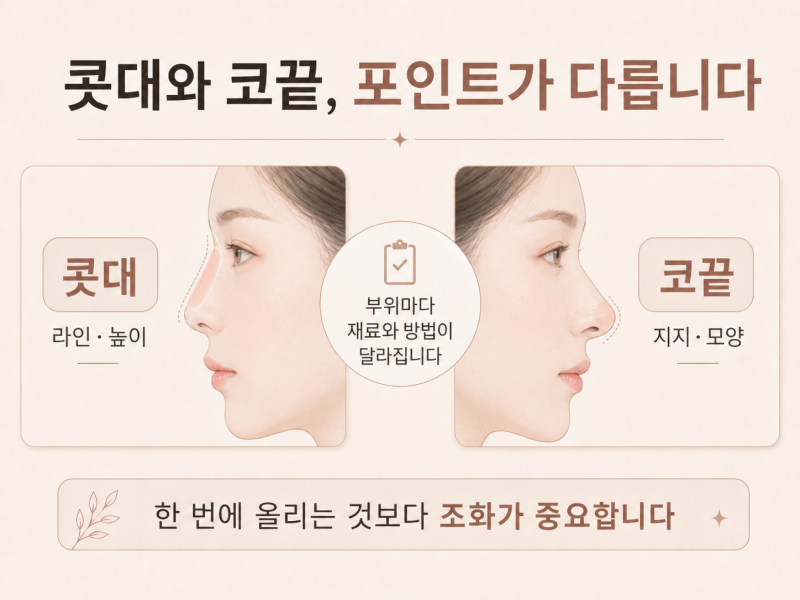
Autologous cartilage, on the other hand, uses your own tissue and is mainly used to shape or support the tip.
Ultimately, no single material is the best choice for everyone. It’s easier to understand if you think separately about what the bridge needs and how much support the tip requires.
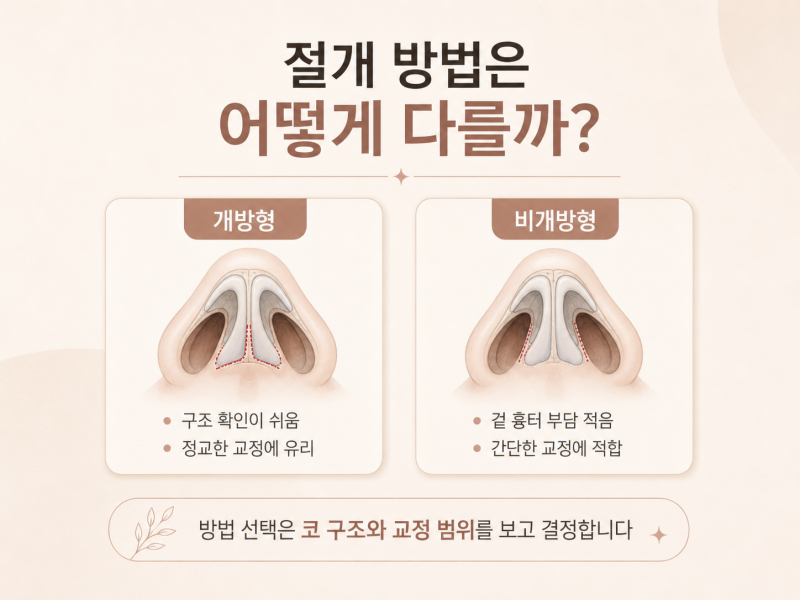
The choice between open and closed rhinoplasty also depends on the scope of the surgery.
In an open rhinoplasty, incisions are made inside the nostrils and across the columella, allowing the internal structure to be checked thoroughly while it’s corrected. It can be used when the tip cartilage needs to be repositioned, or when the correction is extensive and the internal structure requires careful attention.
A closed approach works through the inside of the nostrils without an incision on the columella. It places less burden on visible incision lines, but it isn’t suitable for every nose.
Rather than choosing the closed method just because of concern about scarring, or the open method simply because it seems more precise, the right order is to first determine how much correction your nose actually needs.
Think about when you need to look your best, rather than just the surgery date.

Many people plan their surgery around vacations or school breaks.
In that case, rather than just picking a surgery date, first think about when your important events fall.
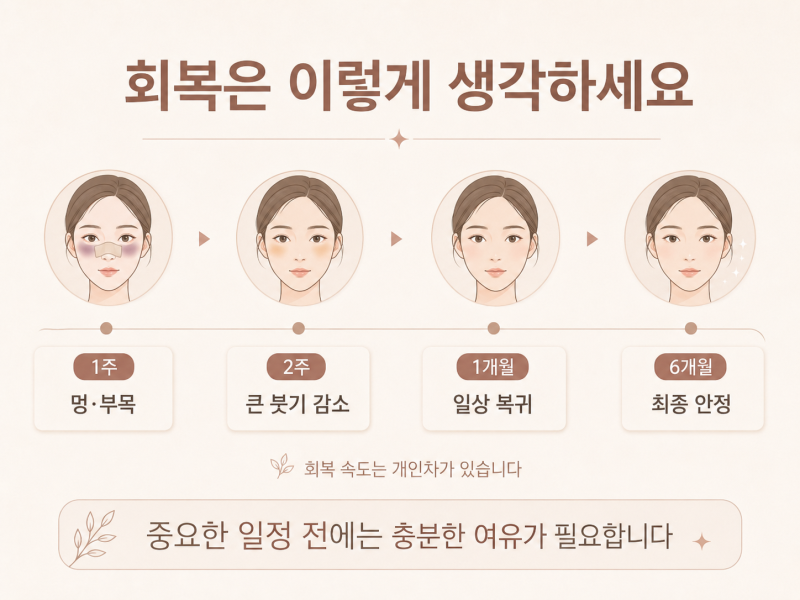
Swelling after rhinoplasty varies depending on the scope of the surgery and individual differences, but noticeable swelling and bruising may appear during the first one to two weeks.
Even after the major swelling goes down, residual swelling takes more time to resolve, and the tissue needs time to settle.

So when you’re considering your rhinoplasty recovery period, it helps to think separately about “when you can go back to work” and “when you’ll look natural enough to be photographed.”
If you have events where changes in your appearance matter, such as an important photo shoot, a trip, or a job interview, it’s best to plan with plenty of buffer time.
It’s still not too late to compare costs at the end of your consultation.
We completely understand wanting to look up rhinoplasty costs first.
But there can be reasons behind price differences.
Whether the surgery corrects only the bridge or the tip as well, which materials are used, whether autologous cartilage harvesting is required, and whether it’s a first surgery or a revision all change the procedure itself.
If you only compare prices, it’s easy to miss what matters most: why this surgery is needed.
During your consultation, it’s worth getting a full explanation of which parts of your current nose will be changed, which materials will be used and why, and what the expected recovery process looks like.
Rhinoplasty is less about simply making the nose taller and more about achieving balance within the face.

From the front, check whether the nose looks too narrow. From the side, check whether the bridge and tip connect naturally. And check whether it still looks natural when you smile.
If this is your first consultation, you don’t need to arrive with a final answer.
A few photos of the look you like, the shapes you want to avoid, and any important schedule are more than enough to start.
From there, go through what’s possible for your nose and which areas you shouldn’t push too far, one step at a time.
That process can be the first step toward a nose that still suits your face, even after years of looking at it.
This post is a medical advertisement written by the clinic for the purpose of providing medical information. It complies with Article 56, Paragraph 1 of the Medical Service Act. Results may vary depending on individual constitution and health condition, so please make treatment decisions after thorough consultation with your medical team. |
Frequently Asked Questions
Do I have to do both the bridge and the tip in rhinoplasty?
Not necessarily. If the bridge isn’t very low but the tip looks round and blunt, or droops when you smile, adjusting the support and direction of the tip may be considered rather than making large changes to the entire nose.
What autologous cartilage is used in tip rhinoplasty?
Autologous cartilage such as septal cartilage or ear cartilage may be used. Septal cartilage can be harvested from inside the nose and has relatively strong support, so it’s used to raise the tip or shape its form. Ear cartilage is flexible and is used to softly reinforce the tip. Rib cartilage may be considered when the correction is extensive or there isn’t enough cartilage available.
Is silicone or autologous cartilage better?
There’s no single right answer, and one material isn’t the best choice for everyone. Silicone and other artificial implants are mainly used to create the height and line of the bridge and are easy to adjust in shape. Autologous cartilage is mainly used to shape or support the tip. The appropriate height should be chosen by considering skin thickness and the current condition of the bridge.
Should I choose open or closed rhinoplasty?
It depends on the scope of the surgery rather than one method for everyone. The open approach makes incisions inside the nostrils and across the columella to thoroughly check and correct the internal structure. The closed approach works through the inside of the nostrils without an external columellar incision, but it isn’t suitable for every nose.
How long does swelling last after rhinoplasty?
Noticeable swelling and bruising may appear during the first one to two weeks. The timeline varies depending on the scope of the surgery and individual differences. Even after major swelling subsides, residual swelling takes more time to resolve, and the tissue needs time to settle.
What should I prepare for my first consultation?
A few photos of the look you like, the shapes you want to avoid, and any important schedule are enough. You don’t need to arrive with a finished answer. During the consultation, you can go through which changes are possible for your nose and which areas you shouldn’t push too far.