2026-11-09
Ulthera at a Sinnonhyeon Station Dermatology Clinic: Check This Before Worrying About Pain
A guide to Ulthera at a Sinnonhyeon Station dermatology clinic, covering how it works, when results appear, pain and swelling, cheek hollowing, shot count, and how to choose the right treatment plan.


When you look at a photo, your jawline may seem blurrier than before, or the area below your cheeks may look heavy when you smile. Sometimes your face just seems bigger for no clear reason.
In situations like this, many people think of Ulthera at a dermatology clinic near Sinnonhyeon Station. But once you start looking into it, concerns about pain, swelling, and cheek hollowing often come up before any questions about results.
So today, rather than focusing on how painful it is, I'll walk you through your face type first, step by step.
Why is Ulthera used for contouring the face?
Ulthera delivers high-intensity focused ultrasound energy to the deeper layers of the skin to stimulate sagging tissue.
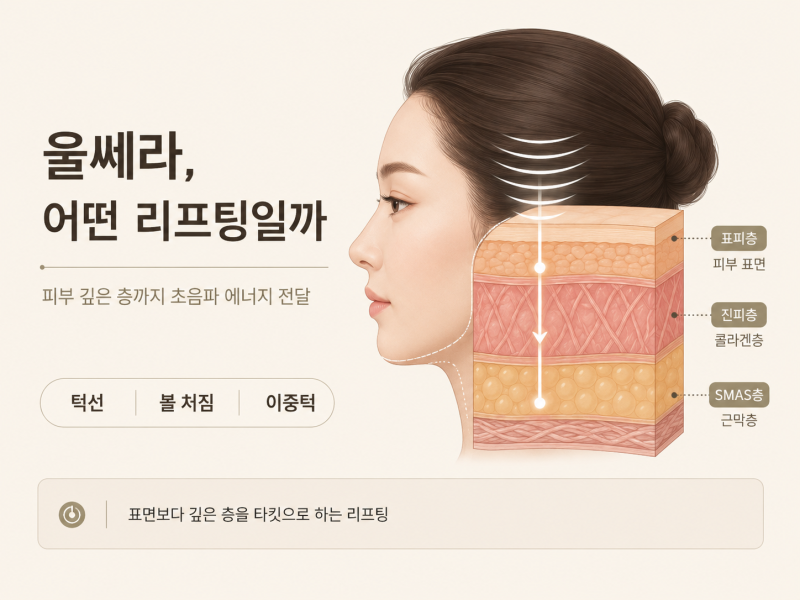
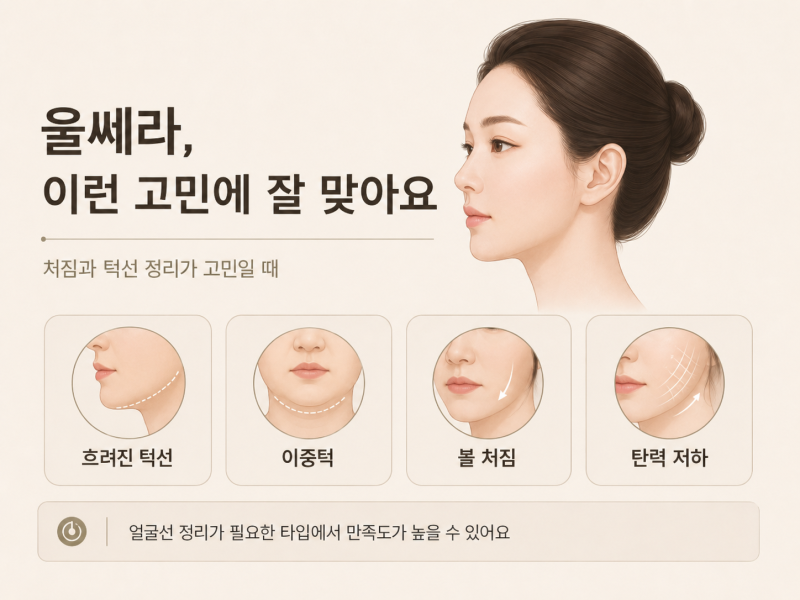
Because it targets deeper layers rather than just the skin's surface, it is used when facial contours have become blurred, such as with jawline laxity, double chin, or cheek sagging.
That said, going deeper isn't always better. Skin thickness and fat distribution differ from one area to another, so even within the same face, the approach should vary by region.
It's not unusual if you don't see changes right away. When you search for Ulthera results, before-and-after photos tend to catch your eye first, but actual changes usually appear somewhat gradually.
Right after treatment, you may feel pulling or tightness. During this period, temporary tissue contraction and swelling are also part of what you feel.
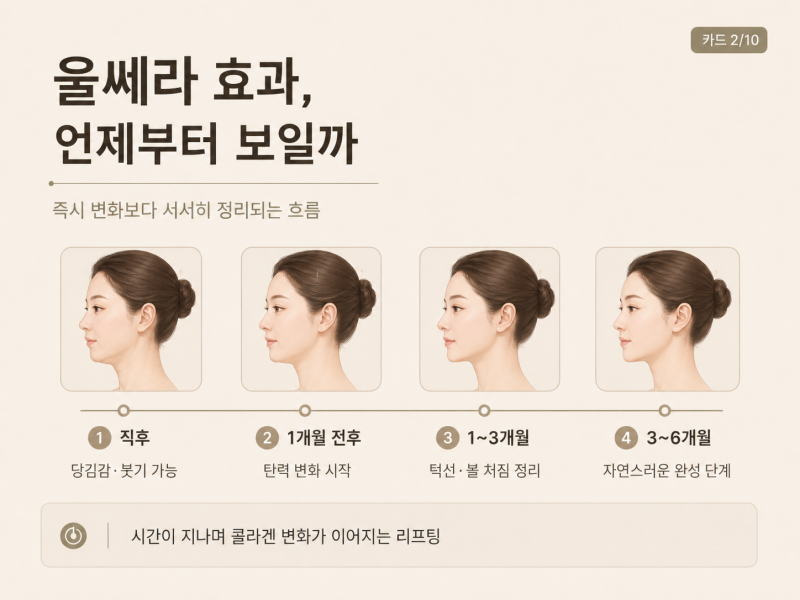
Changes in firmness usually begin to be noticeable around one month after treatment. Between one and three months, jawline and cheek sagging gradually tighten up, and between three and six months, collagen changes continue and the facial contour often settles into a more natural shape.
The duration of results can't be pinned down to a single number. How long Ulthera lasts depends on age, skin elasticity, the degree of sagging, the treatment area, and lifestyle habits.

Some people feel satisfied for several months, while others feel the effects fade relatively quickly.
For those in their 20s and 30s whose skin elasticity is still good, treatment is often aimed at light contour refinement or preventive care. From your 40s onward, the area of sagging tends to widen, so it's better to look at facial structure more carefully.
Rather than focusing on how many months it lasts, it's more realistic to first check how much your skin is sagging and where your fat is distributed.
There's also a reason certain areas hurt more than others. Ulthera pain can feel like a tingling or throbbing sensation deep inside, as the energy reaches the deeper layers of the skin.
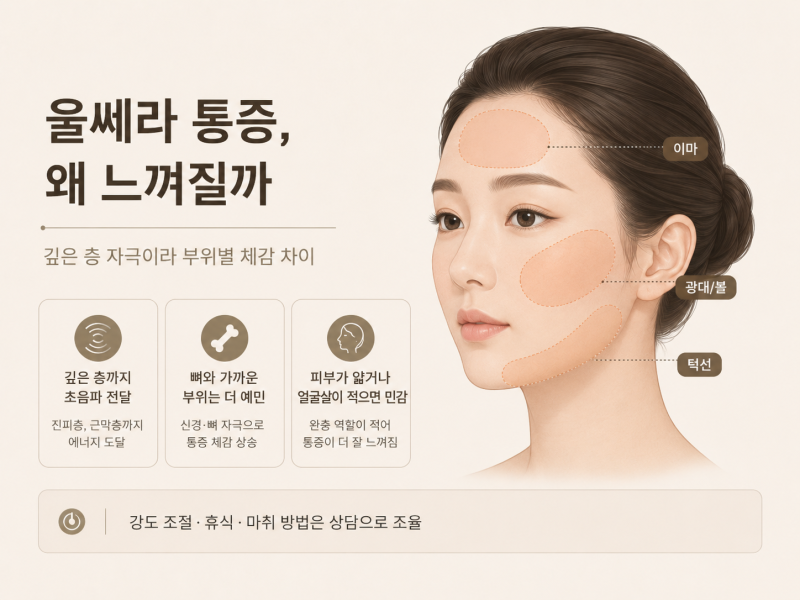
Areas close to bone, such as the jawline, cheekbones, and forehead, can feel stimulation more sharply. Pain can also feel stronger if you have less facial fat or thinner skin.
Rather than simply enduring it, it's better to combine approaches such as anesthesia options, breaks during treatment, and energy adjustments. Also keep in mind that stronger pain does not mean better results.
How much swelling or bruising should I expect?
After treatment, you may experience redness, swelling, tightness, throbbing, or bruising.
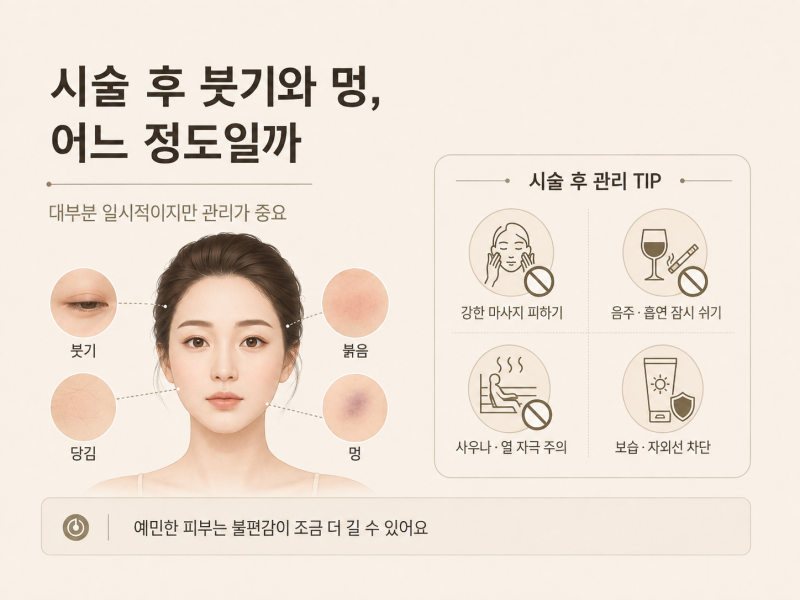
Most of these ease over time, but discomfort may last a little longer for those with thin or sensitive skin, or when the treatment area is wide. Swelling usually subsides within a few days, but depending on the individual, it may last one to two weeks.
Right after treatment, it's best to avoid vigorous massage, drinking, smoking, and excessive sauna sessions for a while, and to keep up with moisturizing and sun protection.
If your face is on the slimmer side, pay closer attention to cheek hollowing. People worried about hollowing after Ulthera often already have a sunken area below the cheekbones or little cheek volume.
If every area of a face like this is treated at the same intensity, even the volume you need may appear reduced, making the face look even more gaunt. That's why it's important to distinguish between areas that need contouring, like the jawline, which can be treated thoroughly, and areas like the center of the cheek or places that are already sunken, which should be approached conservatively.
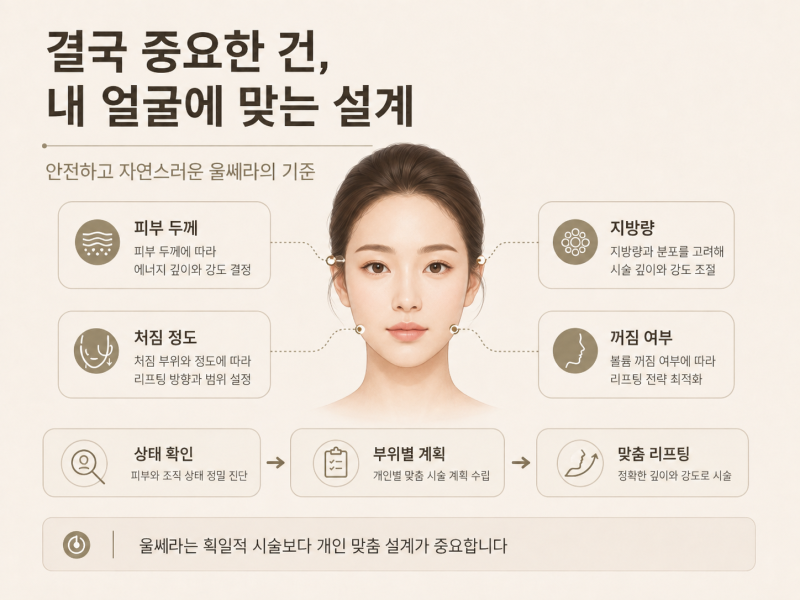
What matters is not treating the entire face aggressively, but separating the areas to tighten from the areas to protect.
Is a higher shot count always better?
When comparing Ulthera shot counts, it can feel like a higher number means better results. However, adding many shots to a face with little sagging doesn't necessarily increase satisfaction.
Conversely, if sagging covers a wide area but only a small area is treated, it may be hard to see the change you want.
Even with the same shot count, results can differ depending on how many shots are placed along the jawline, how much the cheeks are avoided, and which depth is used. Ultimately, before shot count, what you should look at first is the direction of sagging, skin thickness, fat volume, and whether there is any hollowing.
There's a reason results differ even with the same device. Ulthera isn't a treatment that applies the same depth and intensity across the entire face.
Areas with more thickness, such as under the chin, and areas where hollowing needs to be watched, such as under the cheekbones, require different approaches. Shot placement also changes depending on where the sagging begins. That's why the process matters: checking the structures beneath the skin on screen, identifying the layers that need treatment, and then performing the procedure.
A small face doesn't necessarily need fewer shots, and a large face doesn't automatically need more. Natural contours are easier to achieve when you also consider how wide the treatment area is and where the volume that must be preserved lies.
Before treatment, check this as well. If you've had lifting treatment before, it's a good idea to tell your provider which device you received and when.
If you've recently had a significant change in weight or lost a lot of facial fat, it may be difficult to use the same intensity. If you have an important event coming up, it's wise to schedule the treatment with the possibility of swelling in mind.
Rather than simply following the results in photos, make your decision after thoroughly hearing an explanation of which areas of your face should be lifted and which should be preserved.
Ultimately, understanding your face type comes first. Rather than only asking whether or not to get Ulthera, it's better to start by checking whether your face is the type that suits this treatment.
If your jawline has lost definition and you also have double chin or cheek sagging, it may help. However, if you have very little facial fat or pronounced hollowing already, a different lifting treatment may be a more natural choice.

When deciding on treatment, genuine equipment and whether genuine tips are used matter. You should also check whether the clinic examines your facial structure in person and plans the treatment area by area.
Not receiving more, but precisely targeting where it's needed. Ulthera satisfaction ultimately comes down to exactly this.
This post is a medical advertisement written by the clinic for the purpose of providing medical information.
This post complies with Article 56, Paragraph 1 of the Medical Service Act regarding medical advertising.
Results may vary depending on individual constitution and health status, so please make your treatment decision after thorough consultation with your medical team.
Frequently Asked Questions
What facial concerns is Ulthera used for?
It is used when facial contours have become blurred, such as with jawline laxity, double chin, or cheek sagging. Ulthera delivers high-intensity focused ultrasound energy to the deeper layers of the skin to stimulate sagging tissue.
When do Ulthera effects start to show?
Changes in firmness usually begin to be noticeable around one month after treatment. Between one and three months, jawline and cheek sagging gradually tighten up, and between three and six months, collagen changes continue and the facial contour often settles into a more natural shape.
How long does swelling last after Ulthera?
Swelling usually goes down within a few days, but depending on the individual, it may last one to two weeks. Discomfort may last a little longer for those with thin or sensitive skin or for wider treatment areas.
Which areas feel the most pain during Ulthera?
Pain may feel sharper in areas close to bone, such as the jawline, cheekbones, and forehead. Pain can also feel stronger for those with less facial fat or thinner skin, but stronger pain does not mean better results.
Are more Ulthera shots always better?
No. A higher shot count does not necessarily lead to greater satisfaction. Rather than adding many shots to a face with little sagging, it is more important to first examine the direction of sagging, skin thickness, fat volume, and whether there is any hollowing.
How many months does Ulthera last?
It is difficult to pin the duration down to a single number of months. Duration depends on age, skin elasticity, degree of sagging, treatment area, and lifestyle habits, and how long people feel satisfied can vary from person to person.