2026-11-07
Volnewmer at Shinnonhyeon Station Dermatology: Which Tip Suits Each Area and Skin Type
A guide to Volnewmer's four tip sizes by facial area, how high-frequency heat firms the dermis, its cooling method, and when results appear.

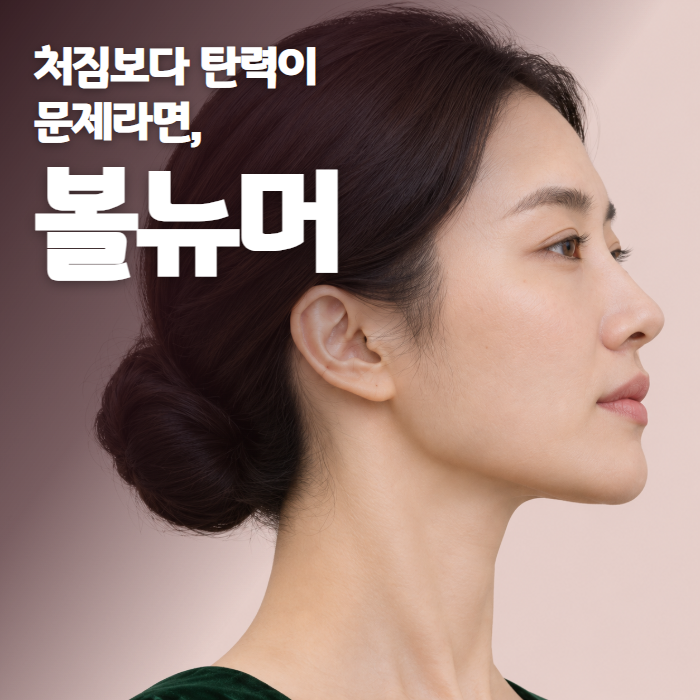
Side profile of a woman with the headline: “If firmness is the issue more than sagging, Volnewmer.”
Have you ever looked in the mirror and noticed that nothing has really sagged, yet your skin doesn't feel as firm as it used to? Makeup may not sit as smoothly, and the fine lines around your eyes may bother you more and more.
When you start looking into lifting treatments, there are so many device names. Yet it's hard to tell which one actually suits your skin.
Dr. Park Si-hyun in a white coat, speaking to the camera in a clinic room.
Hello, this is Dojagi Clinic. If you came across this article while searching for dermatology clinics near Shinnonhyeon Station and are curious about Volnewmer, we'll walk you through which area each tip is meant for and which skin types it suits best.

Profile of Park Si-hyun, head doctor of DOJAGI Clinic: ENT specialist, Stanford medicine training, ex-director of plastic surgery clinics.
Let's start with a quick overview. This device uses high-frequency heat to warm the dermis and tighten skin that has lost its firmness. The tip is switched depending on the facial area, and the approach can change depending on how deep the sagging is.
Where does the high-frequency heat reach in the skin?
This device is a monopolar system, delivering high-frequency energy through a single electrode. The heat doesn't stop at the skin's surface. It reaches both the upper and lower layers of the dermis, causing collagen to contract and stimulating the body to build new collagen. The dermis is the layer that holds up the skin's structure, so as it firms up, the skin gradually feels tighter and more lifted. The device is designed to keep the outermost epidermis cool while concentrating heat in the dermis beneath it.
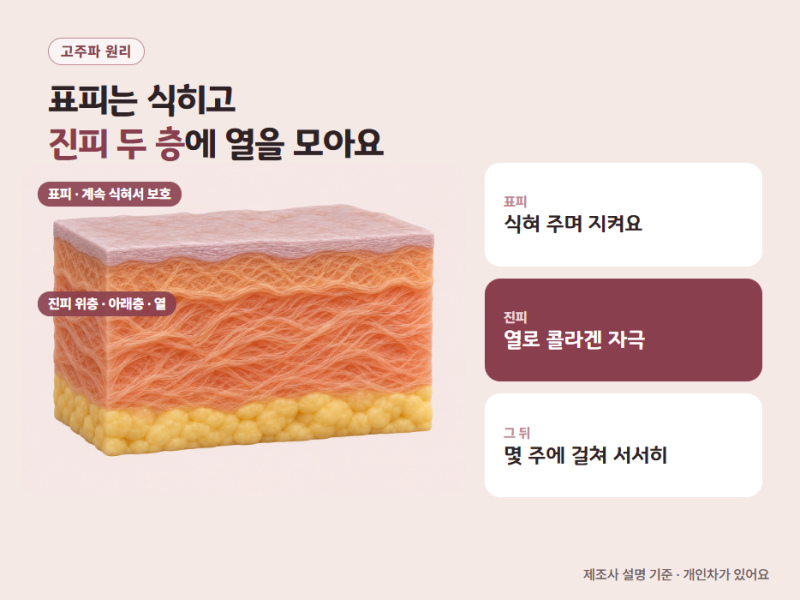
How RF works: the epidermis is cooled while heat targets two dermal layers to stimulate collagen over weeks. Per manufacturer; varies by person.
Because collagen takes time to rebuild after heat stimulation, changes tend to appear gradually over several weeks rather than on the day of treatment. There's no need to feel rushed if you don't see results right away.
Why are there multiple tips?
The face has both broad, flat areas and narrow, contoured ones. If you treated the entire face with a single tip size, the narrow areas would be hard to handle delicately, and the broader areas would take a long time. That's why the manufacturer offers four tips of different sizes, each matched to a specific area.
Tip | Area | Features |
I Tip | Eyes, mouth corners | Smallest size |
F Tip | Jawline, chin tip | Contour refinement |
V Tip | Entire face | Standard tip |
S Tip | Abdomen, arms | For body use |
For thin, narrow areas such as the eyes, the small tip allows for delicate treatment. For jawline lifting that refines the contour, a chin-specific tip is used. Switching tips within the same face lets the heat-delivery area be divided appropriately for each region. Which tip is used where is decided during consultation, based on your face size and the areas you're concerned about.
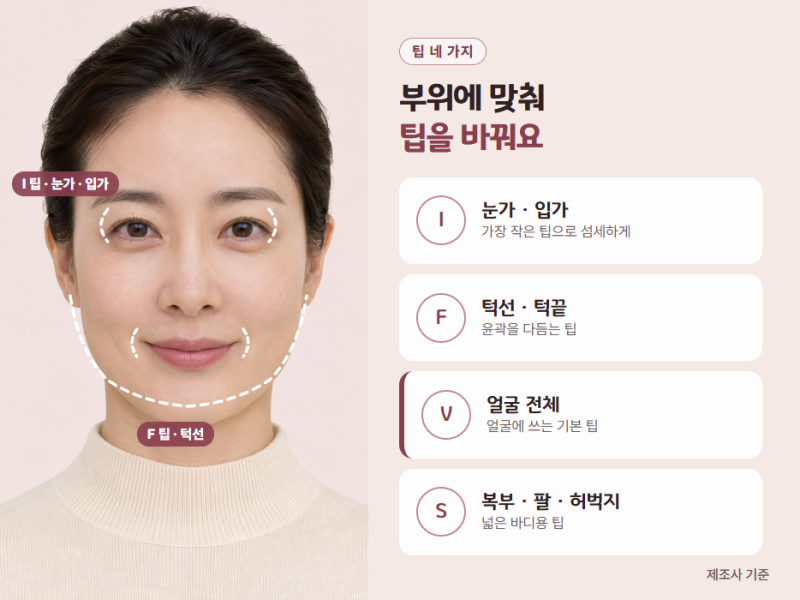
Four tips by area: I for around the eyes and mouth, F for jawline and chin, V for the whole face, S for abdomen, arms and thighs.
Will it feel hot or painful?
If this is your first time with high-frequency lifting, you may be worried about the heat. This device uses water cooling: chilled water circulates inside the tip, keeping the skin's surface cool throughout the treatment. Unlike devices that spray gas to cool the skin, cooling continues for as long as the tip is in contact with the skin. Several physicians have consistently noted that patients find it relatively comfortable.
The treatment proceeds in this order: once the tip touches the skin, the device first checks skin resistance, then turns on cooling, and finally delivers heat. The manufacturer also notes that the design keeps energy from concentrating at the edges of the tip.
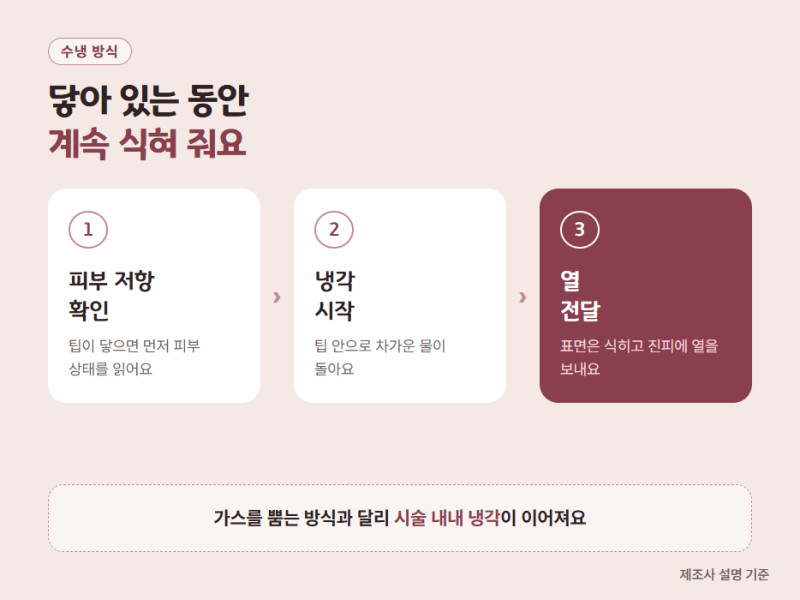
Cooling steps: check skin resistance, circulate cold water in the tip, then deliver heat. Unlike gas-spray methods, cooling continues throughout.
Since this is a heat-based treatment, you may still feel warmth. If it feels hot, don't hold back. Please tell us right away. If you've had a procedure before or you're sensitive to heat, please let us know before treatment.
Does it work for sagging cheeks?
Lifting treatments differ in how deep they reach depending on the device. High-frequency focuses on tightening the dermis to restore firmness, while ultrasound delivers heat to deeper layers, reaching the fascial layer. Neither is better across the board. They target different layers, so it's important to first know which layer your concern lies in.
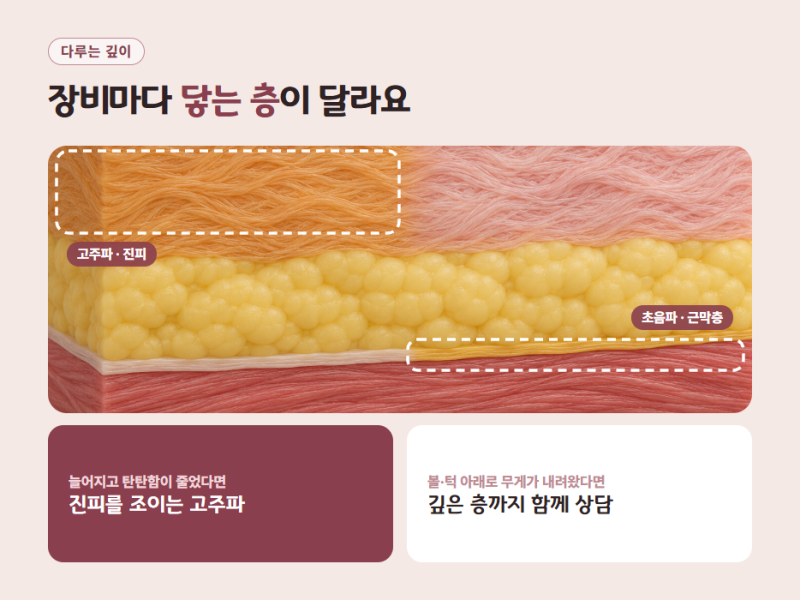
RF reaches the dermis, ultrasound the fascia layer. For slack skin: RF; for weight dropping under cheeks and chin: discuss deeper layers too.
If your skin texture has loosened and feels less firm, high-frequency tightening is often a good fit. If tissue has dropped down toward your cheeks and under your chin, we often look at approaches that reach deeper layers as well. Some people are only concerned about a narrow area like the crow's feet, while others want overall facial lifting. That's why it helps to define the scope of your concerns first.
During consultation, it helps to look in the mirror and point to the area that bothers you most. That way, we can talk through together whether it's sagging or loosening.
Check which of these applies to you:
□ My skin has lost firmness rather than sagging
→ We'll look at methods that tighten the dermis first.
□ Tissue has dropped down toward my cheeks and under my chin
→ We'll also discuss deeper-layer lifting.
□ My concern is a narrow area like the eyes or mouth corners
→ We'll check whether it's treated with smaller tips.
□ This is my first time with a heat-based treatment
→ We'll go over the cooling method and steps in advance.
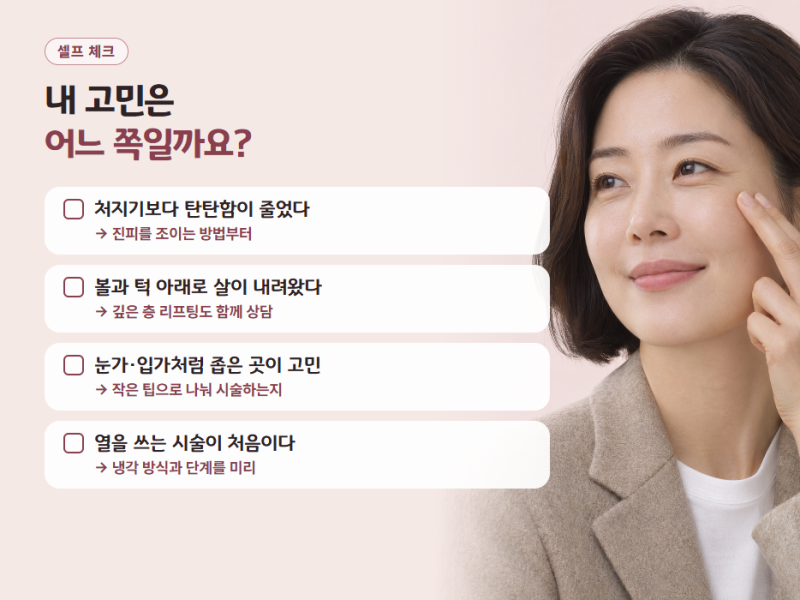
Self-check: firmness loss → tighten dermis; sagging cheeks/chin → discuss deep lifting; eye/mouth areas → small tips; first time → review cooling.
How does Dojagi Clinic approach treatment?
At Dojagi Clinic, we examine your face before choosing a treatment. We look at skin thickness, fat distribution, and the depth of the muscle layers, then combine the methods that suit each area.

Dr. Park Si-hyun in a white coat, seated and speaking to the camera.
We have both high-frequency and ultrasound lifting devices, so we can choose based on how deep the sagging goes. In our device introduction, we describe this device as one that helps refine the cheek and jawline and supports skin firmness. Dr. Park Si-hyun, Clinic Director, believes that even with the same device, how it's used should differ from person to person.
Here are answers to some frequently asked questions.
Q. Will I see results right after treatment?
A. Because collagen takes time to settle in, most people notice changes gradually over several weeks. Rather than an immediate lift, skin tends to become firmer little by little.
Q. How often should I get treated?
A. A six-month interval is often recommended, but the schedule can vary depending on your skin condition.
Q. Can it be used on the body, not just the face?
A. There is a large tip designed for the body, so it can be used on broader areas such as the abdomen, arms, and thighs. Whether to treat the face and body on the same day is usually decided during consultation.
Skin that has lost its firmness rarely changes overnight. It's usually the result of gradual changes over time, which can make it feel more frustrating. That's why calmly separating out the causes is the way to avoid going in circles.
The pace at which skin loses firmness varies from person to person. Separating out the depth of sagging and the areas of concern first makes it much clearer what kind of lifting you need. If you keep in mind the differences in tips and depth we covered today when you come in for a consultation, you'll be able to talk about your goals more comfortably.
※ Results and recovery vary from person to person, and side effects such as redness, swelling, and burns may occur.

Dojagi Clinic Parking Information. Patients receiving treatment or surgery get one hour of free parking. After the free period, an additional 1,000 won is charged for every 10 minutes. Valet service is also available (valet fee: 5,000 won).
This post is a medical advertisement written by the clinic for the purpose of providing medical information. It complies with Article 56(1) of the Medical Advertising Act. Since results may vary depending on individual constitution and health status, please make treatment decisions after thorough consultation with your medical team.
Frequently Asked Questions
What kind of treatment is Volnewmer?
It's a lifting method that uses high-frequency heat to warm the dermis and tighten loosened skin. The device is described as water-cooled: chilled water circulates inside the tip, keeping the skin's surface cool throughout the treatment.
How are the tips used for different areas?
Tips of different sizes are used depending on the facial area. The smallest I tip is used for the eyes and mouth corners, the F tip for jawline and chin contouring, and the standard V tip for the entire face. The S tip is used for body areas such as the abdomen and arms.
When do results appear after treatment?
Rather than appearing right away, changes tend to emerge gradually over several weeks. Because collagen takes time to settle after heat stimulation, the skin is described as becoming firmer little by little rather than being lifted immediately.
How often should treatments be done?
A six-month interval is often recommended. However, the schedule can vary depending on your skin condition, so it's best to confirm during consultation.
Can it be done on the body, not just the face?
Yes. A large tip designed for the body is available, so it can be used on broader areas such as the abdomen, arms, and thighs. Whether to treat the face and body on the same day is usually decided during consultation.
What side effects can occur after treatment?
Redness, swelling, and burns may occur. Results and recovery vary from person to person, so if you're sensitive to heat or have had a previous procedure, please let us know before treatment.