2026-10-25
Hump Nose Correction by Type: Sinnonhyeon Plastic Surgery Guide
This guide explains hump nose correction by type: bony protrusion, drooping tip, and low glabella. It covers why cartilage matters, implant-free options, and recovery timelines.


A woman in profile rests her chin on her hand. Text: 'If your side profile bothers you — hump nose.'
Whenever you look at your profile photo, is the bulge in the middle of your nose the first thing you notice? Many people feel uneasy when they are told they look stern or older than they are.
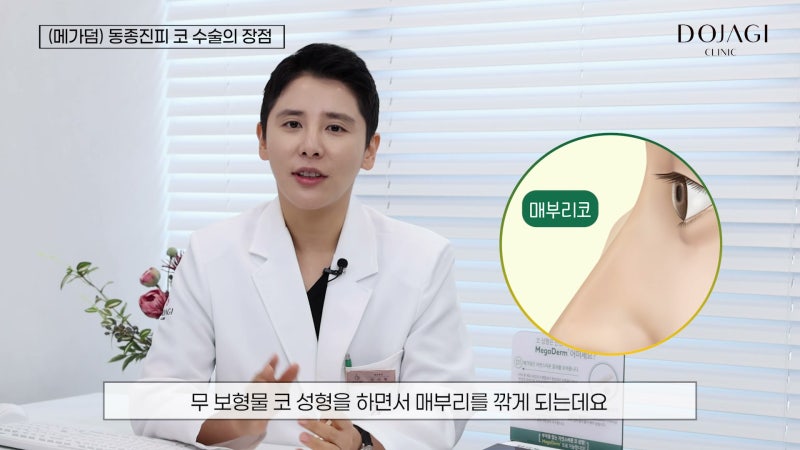
A doctor in a video on MegaDerm nose surgery, beside a hump-nose sketch. Subtitle: 'In implant-free rhinoplasty, the hump gets shaved down.'
Hello, this is Dojagi Clinic of Sinnonhyeon Plastic Surgery.
Profile of Park Si-hyun, head director of DOJAGI Clinic: ENT specialist, Stanford medical school training, and Korean medical society memberships.
If you have been considering hump nose surgery, we hope today's content will be helpful. Here is an overview of what to look at first when refining a protruding nasal bridge.
In short, shaving down the protrusion alone does not finish the job. The height of the nasal bridge and the balance of the nasal tip need to be considered together, and if the conditions are right, the contour can be refined without an implant.
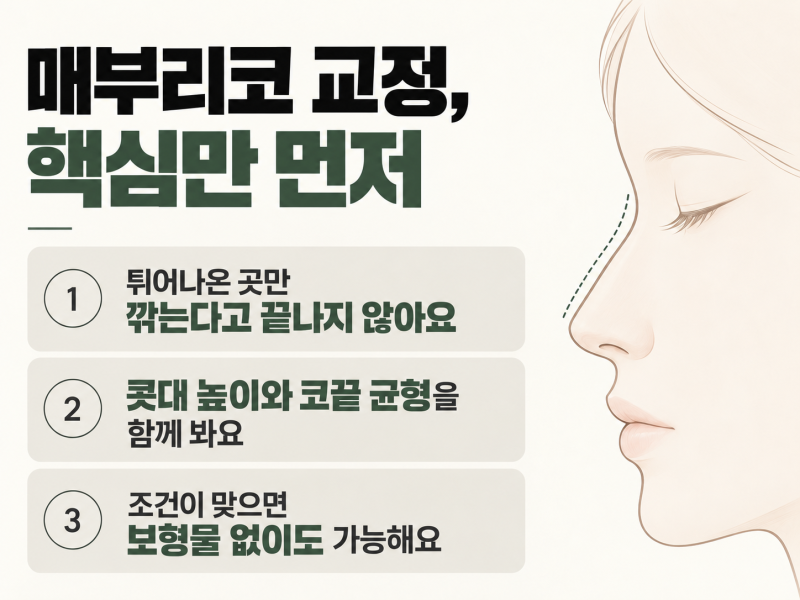
Key points: shaving the bump alone isn't enough, bridge height and tip balance are viewed together, and implant-free works if conditions fit.
Why does my nose look like a hump nose?
A hump nose refers to a nose where the middle of the bridge looks convexly raised. The most prominent point is often where the nasal bone meets the cartilage. There are two main causes: a nose inherited from parents or siblings, and a nose that developed as the area grew after an injury in childhood.
That said, some noses look like hump noses even when nothing actually protrudes. If the nasal tip droops or the area between the brows is low, the middle appears relatively more prominent.
Type | Appearance | Correction approach |
Bony protrusion type | Bulge in the middle | Smoothing the protruding area |
Drooping tip type | Tip points downward | Adjusting the tip angle |
Low glabella type | Upper area recessed | Filling the low area |
So even for the same hump nose, the approach differs depending on whether the area should be shaved down or built up. Knowing which type your nose is comes first.
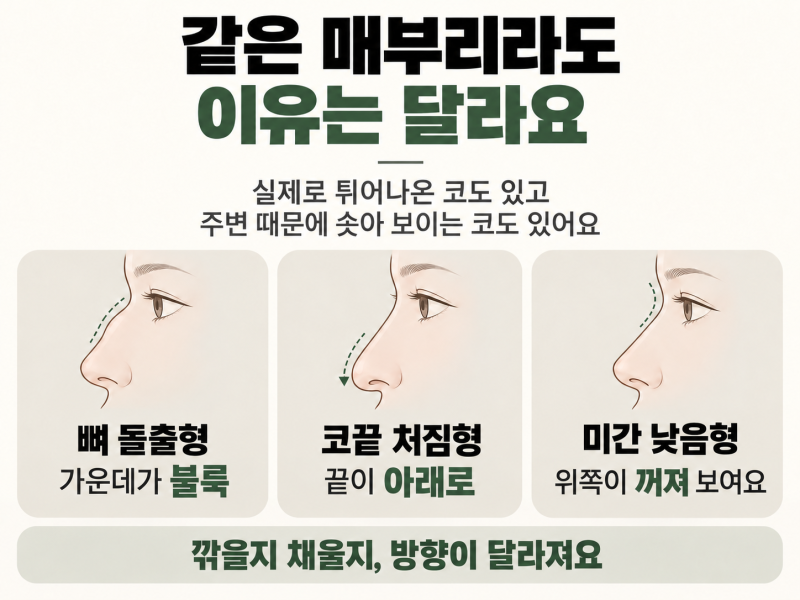
Three hump types: bone protrusion (middle bulges), drooping tip, and low glabella (top looks sunken); the type decides shaving vs. filling.
Is it enough to just shave down the protrusion?
Many people assume that shaving the bone is all it takes. However, the bulge is bone at the top and continues into cartilage below. If only the bone is smoothed and the cartilage is not refined enough, that area can reappear once the swelling subsides, making it feel as though the hump has returned.
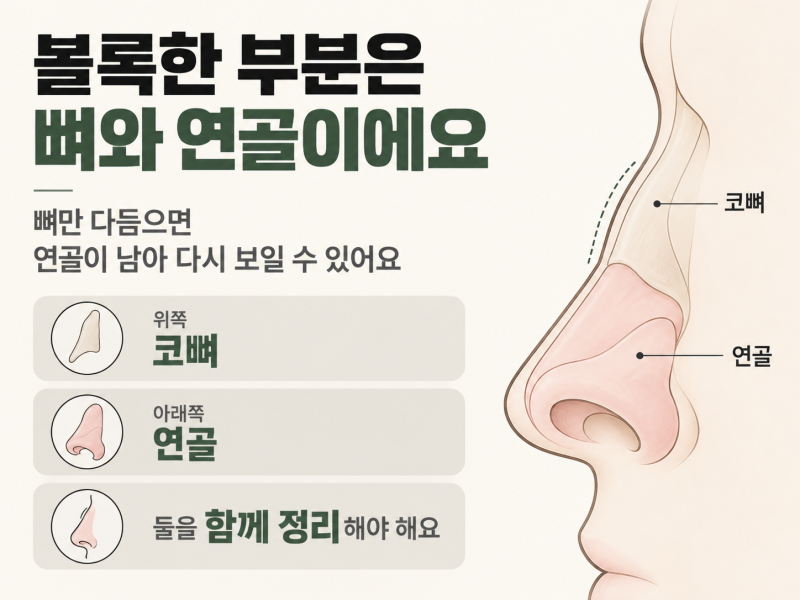
Diagram: the bump is nasal bone (upper) and cartilage (lower). Filing only the bone leaves cartilage that may show again, so both are refined.
On the other hand, removing too much cartilage can make the nasal bridge look unnatural or narrow the airway. That is why we also consider the breathing passage, preserving the cartilage that should remain and reshaping the rest, so that both form and function are protected.
When the protrusion is large, the top of the bridge can look widened after shaving, so an osteotomy, which moves the nasal bones on both sides inward, is sometimes performed as well. Conversely, when the protrusion is small and narrow, simple smoothing may be enough.
The shaving method also depends on size. Small protrusions are ground down to lower their height, while large ones are removed at once and the surface is then smoothed to finish.
The nasal tip must be considered too. When the tip droops and resembles an arrow nose, shaving only the middle may leave the drooping tip in place and make the nose look longer. In such cases, tip surgery is often used to set the angle upright. However, tip height should be matched to the bridge. If the tip is raised a lot while the bridge stays the same, the tip looks as if it is sticking out and the space between them looks hollow, so cartilage is sometimes used to fill and connect that gap.
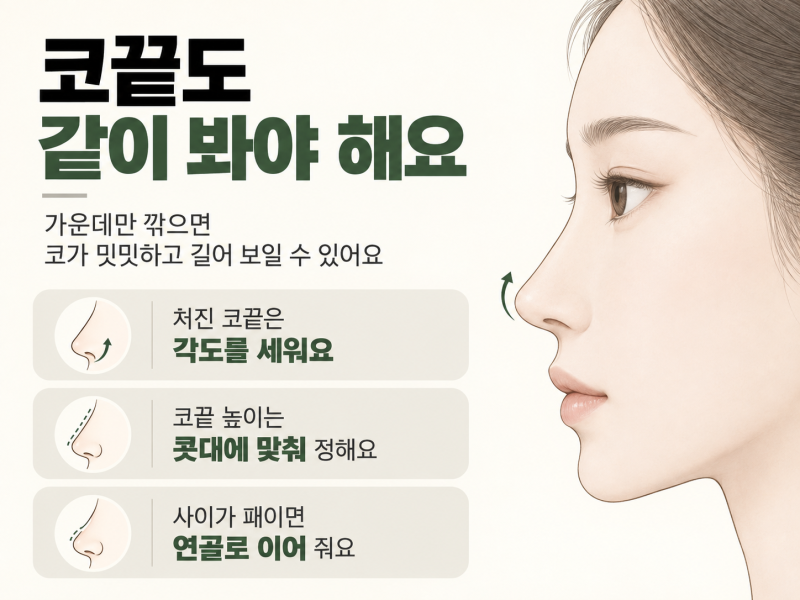
Check the tip too: shaving only the middle may look flat and long. A droopy tip is angled up, matched to the bridge, and dips filled with cartilage.
Is it possible without an implant?
The implant-free approach uses only materials such as autologous cartilage or allogeneic dermis, instead of artificial implants like silicone. Allogeneic dermis is a material made by processing donated skin tissue. Because it does not have to be separated from your own body, you can ease concerns about scarring at a harvest site.
When the bridge is already high enough and only the middle is raised, implant-free nose surgery is often a good fit. Since there is no need to build up height, smoothing the protruding area and refining the tip alone can keep the line flowing smoothly. However, the areas that were shaved may look slightly sunken once the swelling goes down. For this reason, Dojagi Clinic fills those areas with cartilage and secures them with a thin Megaderm. This process helps stabilize the cartilage position and keeps the bridge from looking spread out.
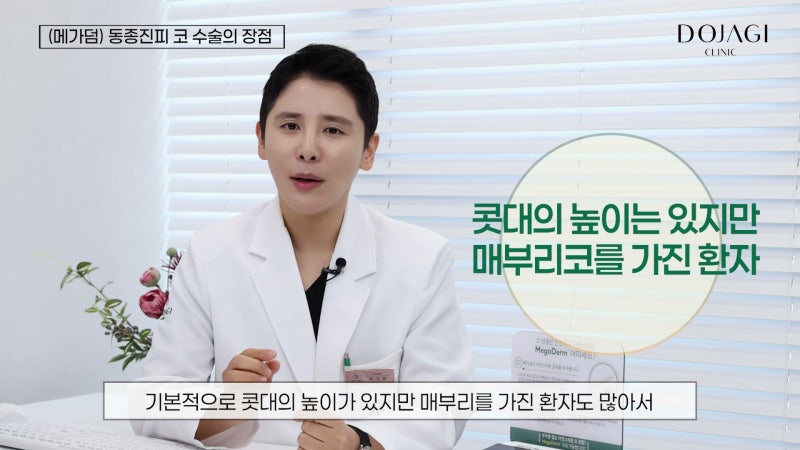
A DOJAGI doctor in a video. On-screen text: 'Patients who have bridge height but a hump nose,' noting there are many such cases.
This approach has an advantage for those worried about an implant showing through. However, because there is no material to cover things up, the shaping must be done with greater precision. If the area between the brows is very low, or if you want a nose much higher than your current one, an implant may also be considered. For thin skin, allogeneic dermis may be layered over a thin silicone implant.
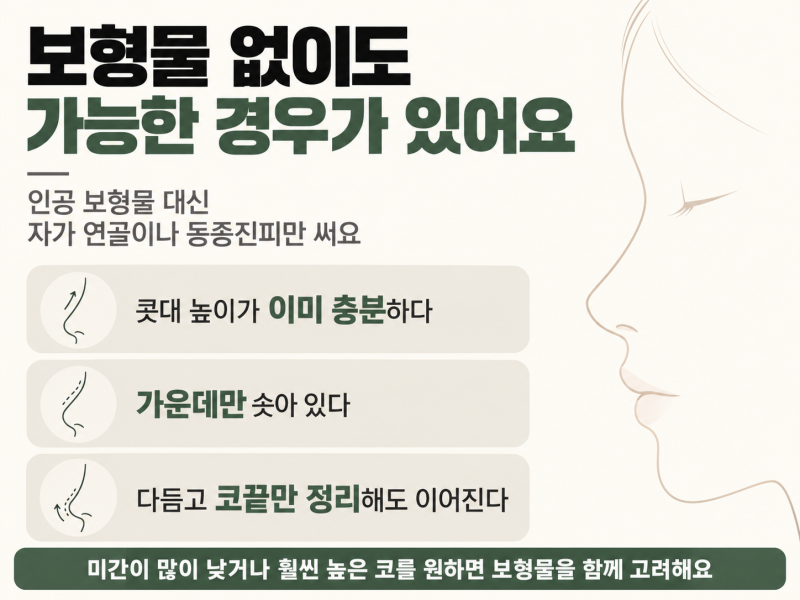
Implant-free (own cartilage or donor dermis) suits a high-enough bridge with only a middle bump. A very low glabella may call for implants.
Check which type your nose is.
□ The bridge is high, but only the middle is raised → An implant-free approach is worth discussing.
□ The area between the brows is quite low → An implant may be considered.
□ The nasal tip looks drooping → Tip correction should be considered as well.
□ I injured my nose as a child → We will check the cause first.
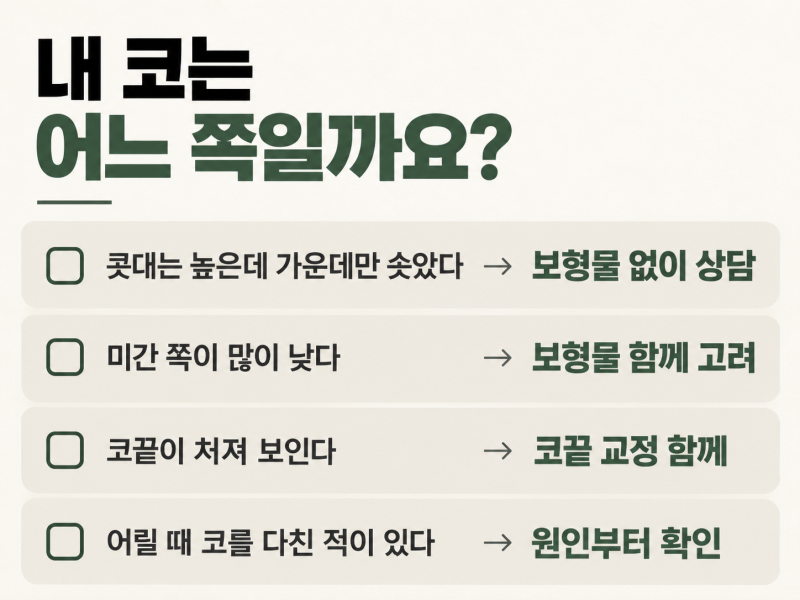
Self-check: mid bump on a high bridge → implant-free; low glabella → implants; droopy tip → tip correction; childhood injury → check cause.
How does Dojagi Clinic assess patients?
Before choosing a surgical method, Dojagi Clinic first examines facial structure and proportions. We look at the profile line running from the forehead to the nose and lips, along with the nasal bridge height and the nasal tip angle. We then propose a nose design that takes into account the look you want and your lifestyle. Medical staff personally oversee everything from consultation through surgery.
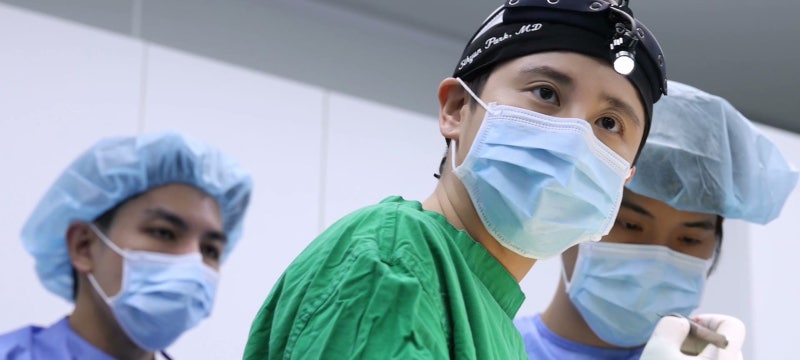
A surgeon in green scrubs and a headlight in the operating room, with masked staff beside him.
Next, we align the height and overall impression you want and decide on the approach together. Even for the same hump nose, the right method differs from person to person. Whether you want a sharper, more defined nose or a more natural look can also change the direction of the surgery.
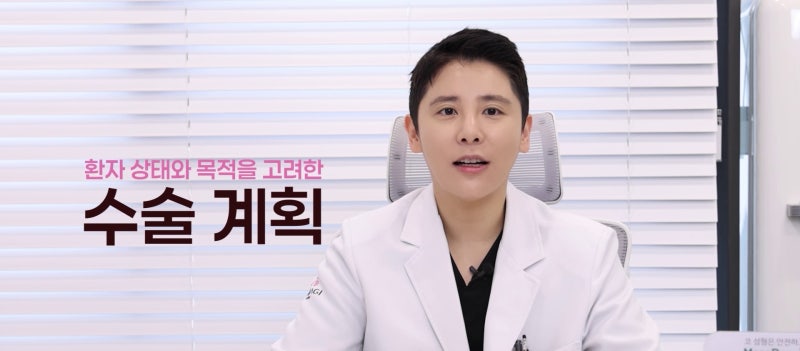
A doctor in a white coat speaks on video. Text: 'A surgical plan that considers the patient's condition and goals.'
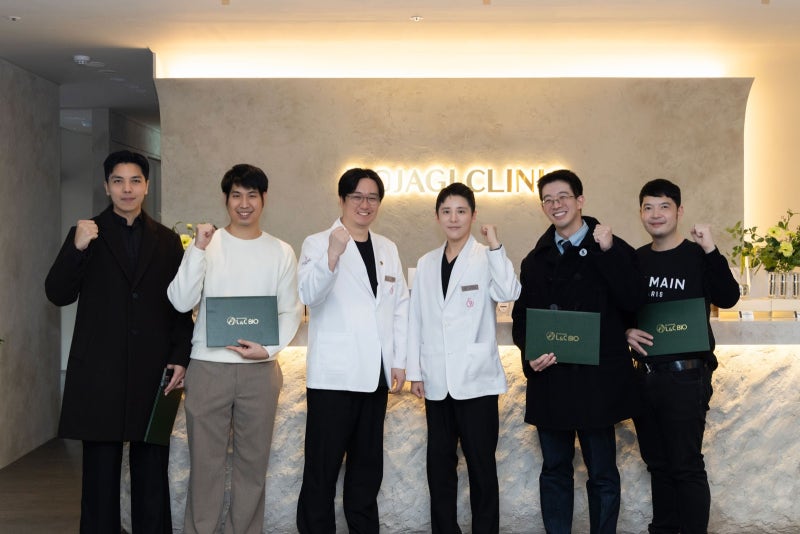
Six men, two in white coats, pose with raised fists and green folders in front of the DOJAGI CLINIC sign.
Dojagi Clinic has also conducted nose surgery training for medical professionals in Thailand.
Here are some frequently asked questions.
Q. Does a shaved hump nose grow back?
A. Cases where the nose looks raised again are usually explained by under-refined cartilage becoming visible as the swelling subsides. This is why refining both bone and cartilage together is so important.
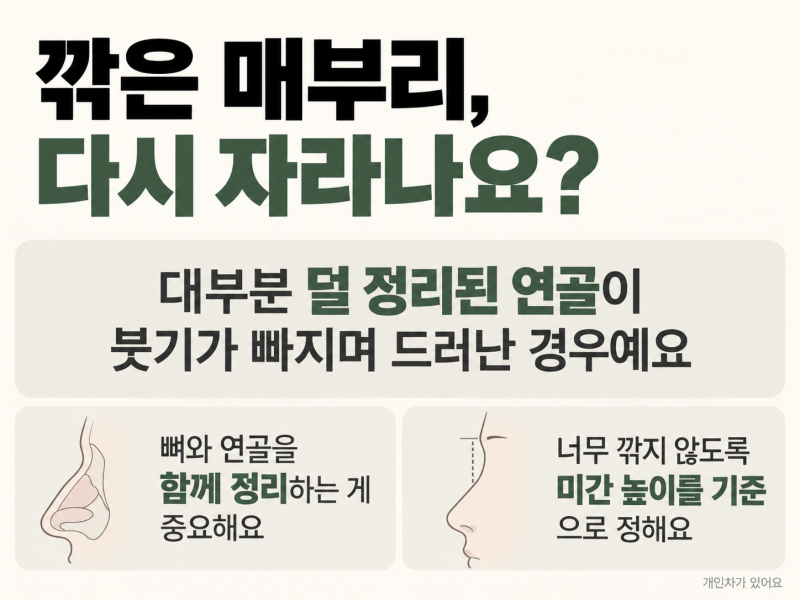
Hump back after shaving? Usually leftover cartilage shows as swelling fades. Bone and cartilage are refined together, with glabella height as the guide.
Q. Is osteotomy always necessary?
A. It depends on the size and width of the protrusion. Smaller cases may be finished with simple smoothing, so it is best to decide after an in-person assessment.
Q. If too much is shaved, will the nose look flat?
A. Shaving too much can make the bridge look sunken. For that reason, the amount to shave is determined based on the height continuing from the glabella, and any shortfall is filled in to balance things out.
Q. How long does the swelling last?
A. Swelling is at its worst for a few days after surgery and then gradually subsides. Large swelling usually goes down within one to three weeks, and it takes about six months for the shape to settle. When lying down, it is best to keep your head slightly elevated and avoid bending your head forward for long periods.
Correcting a hump nose is not just about changing one spot on the bridge. It is about rebalancing the entire profile line. When you start with a clear understanding of the direction that suits you, the results tend to look much more natural.
If you are considering nose surgery, be sure to ask during your consultation whether tip surgery is also needed. Bringing a profile photo of the look you like makes it much easier to talk about the line you want.
※ Surgical results and recovery vary from person to person, and side effects such as swelling, bruising, and asymmetry may occur.
This post is a medical advertisement written by the clinic for the purpose of providing medical information. It complies with Article 56, Paragraph 1 of the Medical Advertising Act. Results may vary depending on individual constitution and health condition, so please make treatment decisions after thorough consultation with your medical team.
Frequently Asked Questions
What does a hump nose look like?
A hump nose refers to a nose where the middle of the bridge looks convexly raised. The most prominent point is often where the nasal bone meets the cartilage. The causes can be divided into those that are inherited and those that develop as the area grows after a nose injury in childhood.
Is it enough to just shave down the protrusion?
No, shaving only the protrusion does not finish the job. The bulge is bone at the top and continues into cartilage below. If only the bone is smoothed and the cartilage is not refined enough, the area may stand out again once the swelling subsides. That is why bone and cartilage are examined together, and the height of the nasal bridge and the balance of the nasal tip are also checked.
Does a shaved hump nose grow back?
Cases where the nose looks raised again are usually explained by under-refined cartilage becoming visible as the swelling subsides. That is why refining both bone and cartilage together is important.
Can a hump nose be corrected without an implant?
Yes, if the conditions are right. For noses where the bridge is already high enough and only the middle is raised, implant-free nose surgery is often a good fit. This approach uses only materials such as autologous cartilage or allogeneic dermis. If the area between the brows is very low, or if you want a much higher nose, an implant may also be considered.
How long does swelling last?
Large swelling usually subsides within one to three weeks, and it takes about six months for the shape to settle. Swelling is at its peak for a few days after surgery and then gradually goes down. When lying down, keep your head slightly elevated and avoid bending your head forward for long periods. Recovery varies from person to person.
Might tip surgery also be needed?
Yes, it may be needed when the nasal tip droops and looks like an arrow nose. Shaving only the middle can leave the drooping tip intact and make the nose look longer, so in these cases the angle is often raised together through tip surgery. Whether it is needed should be confirmed during your consultation.