2026-10-30
Ulthera vs. Shrink: What to Compare First at Sinnonhyeon Station Dermatology
A clear comparison of Ulthera and Shrink lifting covering how each works, treatment feel, duration, pain, cost, and how to choose the right option for your skin.


Title image: "Ulthera vs. Shurink — which lifting is right for me?" with a model between the two devices.
When you look in the mirror and notice your jawline or cheeks sagging more than before, you may start searching for lifting treatments. But when you search, Ulthera and Shrink keep appearing side by side, so first-time patients often find it confusing to tell them apart. That's why, during consultations at our Sinnonhyeon Station dermatology clinic, many people ask about the differences between Ulthera and Shrink first.
Both devices deliver ultrasound energy to the deeper layers of the skin to tighten sagging tissue, but each has distinct equipment characteristics and treatment methods. Today, rather than claiming one device is always better, I'll walk you through the criteria you can use to choose the option that suits you.
Video still: Dr. Park Si-hyun says, "Hello, I'm Park Si-hyun, head director of Dojagi Clinic."
Both use ultrasound, so why do they feel so different?
Ulthera and Shrink both belong to the ultrasound lifting category, which uses high-intensity focused ultrasound (HIFU).

Profile of Dr. Park Si-hyun: ENT specialist, Chonnam National University medical graduate, Stanford training, now director of Dojagi Clinic.
The approach creates thermal coagulation points at a target depth without significantly damaging the skin's surface. The heat then triggers tissue contraction and remodeling over time. That's why it's often used to refine facial contours when the jawline looks blurred or the lower cheeks appear to sag.
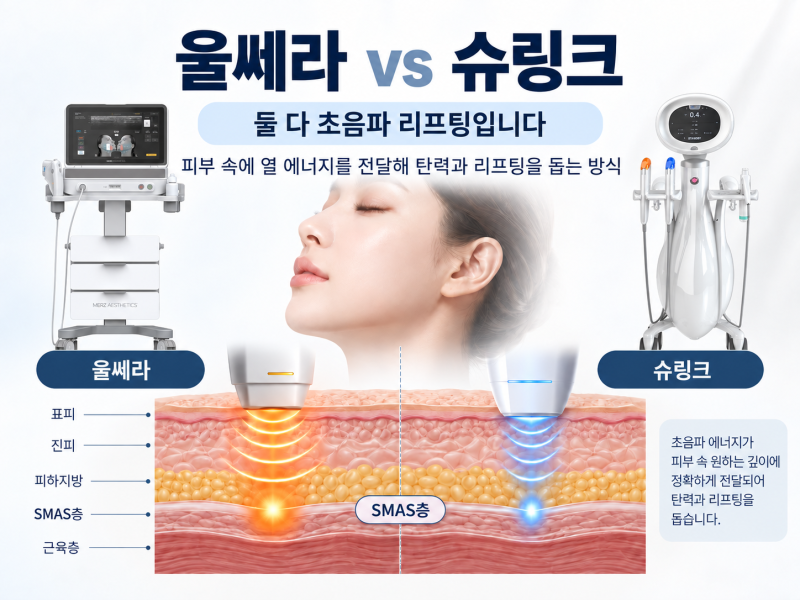
Ulthera vs. Shurink: both are ultrasound lifting, delivering heat energy into the skin. Diagram shows skin layers down to the SMAS.
The underlying principle is similar, but each device delivers energy differently, uses different cartridge configurations, and gives practitioners different information to check during treatment. As a result, the actual treatment experience and how the procedure is planned can vary.
What sets Ulthera apart?
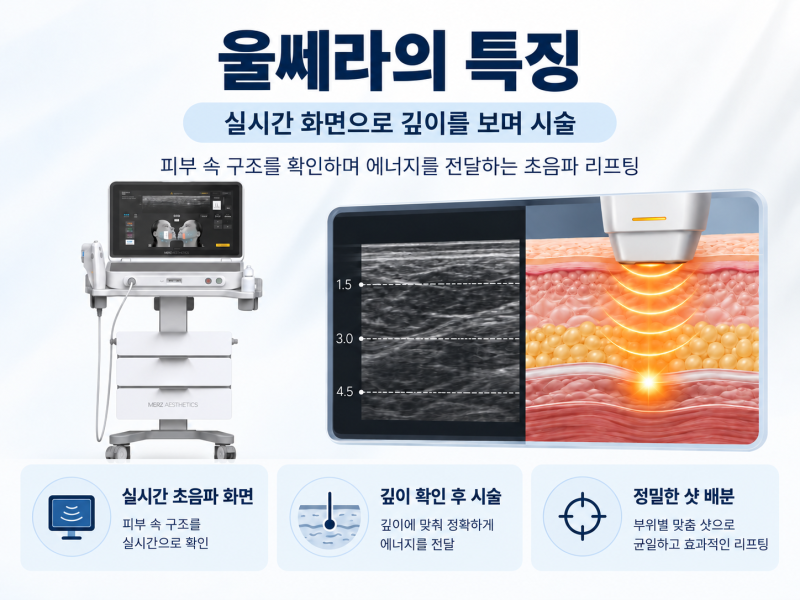
Ulthera features: treatment while viewing skin depth on a real-time ultrasound screen, with depth checks and precise shot distribution.
Ulthera's best-known feature is that you can view the structures beneath the skin on an ultrasound screen during treatment. By checking skin thickness and the position of the fat layers, the provider can better decide the depth at which to deliver energy. For faces with little facial fat or large thickness differences between areas, it matters more to decide where to treat and at what depth than to simply reach a set number of shots.
When evaluating Ulthera's results, it's better not to focus only on the fact that it's a powerful device, but also to consider this real-time imaging feature and how the treatment is planned. Because it's known for its high output, some people feel the pain more acutely, but the actual sensation depends on the treatment area, the intensity, and each person's pain sensitivity.
Who tends to choose Shrink?
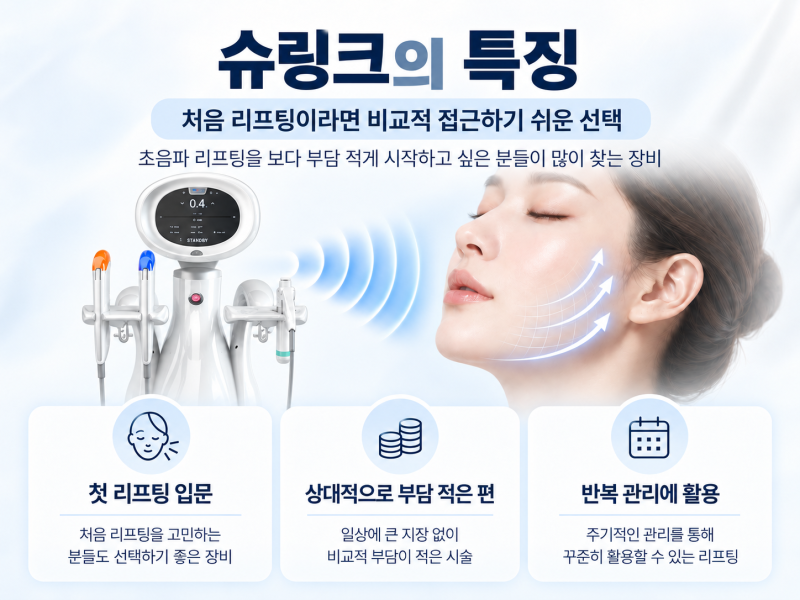
Shurink features: a relatively accessible choice for first-time lifting, with less burden, and suited to repeated regular care.
Shrink is also an ultrasound device in the same family, but it's generally seen as a relatively gentle option. It's often considered by people new to lifting or those particularly concerned about pain, and some choose it when they want to focus treatment on specific areas. Shrink results also vary considerably depending on facial condition, the cartridge used, the number of shots, and the intensity, so it isn't accurate to think of it simply as a cheaper version of Ulthera. Whichever device you choose, the first step is to identify which areas of your face need to be targeted and which should be left alone.
Is the difference in results really that noticeable?
In clinical practice, it's common to hear that Ulthera tends to produce a stronger sensation and longer-lasting results, but there isn't enough data from direct comparisons under identical conditions to conclude that one device is superior to the other.
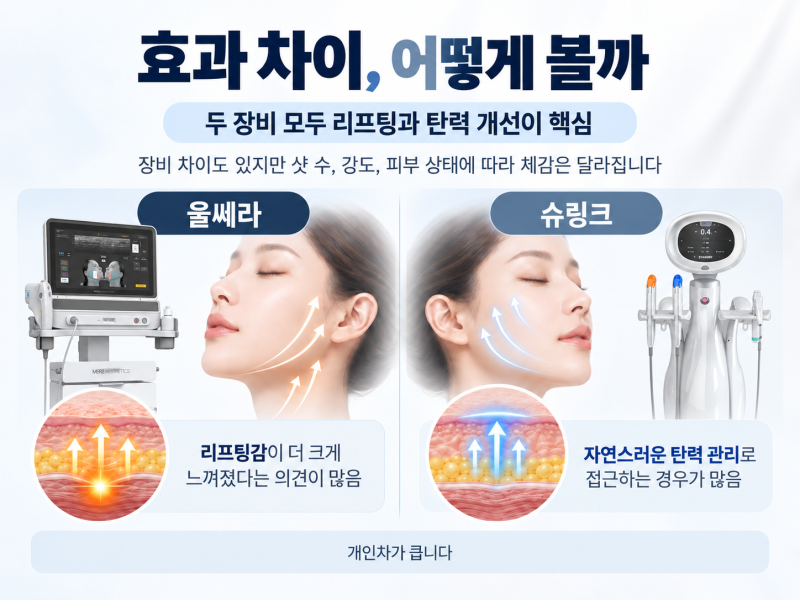
Effect comparison: many feel a stronger lift with Ulthera, while Shurink is often chosen for natural firmness care. Results vary by person.
So rather than predicting results from the device name alone, it's important to consider your current skin elasticity, facial fat volume, and the degree of sagging. You wouldn't treat someone with a fuller face and a heavy lower face the same way as someone with less facial fat but reduced skin elasticity. Ultimately, differences in results are influenced not only by the device itself, but also by the treatment area, energy intensity, and how the shots are distributed.
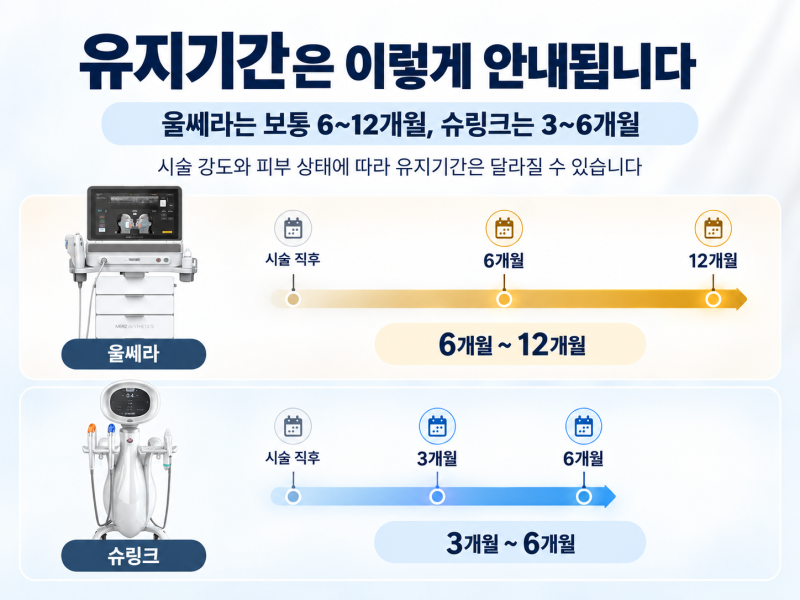
Duration guide: Ulthera usually lasts 6–12 months and Shurink 3–6 months, varying with intensity and skin condition.
If you look up how long lifting results last, you'll often see that Ulthera lasts roughly 6 months to a year, while Shrink lasts about 3 to 6 months. However, these figures don't apply equally to everyone. Age, skin elasticity, lifestyle habits, and the intensity and frequency of sessions can all change how long the results feel, and even the same person may notice differences depending on their skin condition at the time of treatment. So rather than focusing on a specific number of months, it's more practical to consider the change you want along with how often you can realistically visit the clinic.
If you're worried about pain, how should you evaluate it?
Pain is an important factor to consider when looking into lifting treatments.
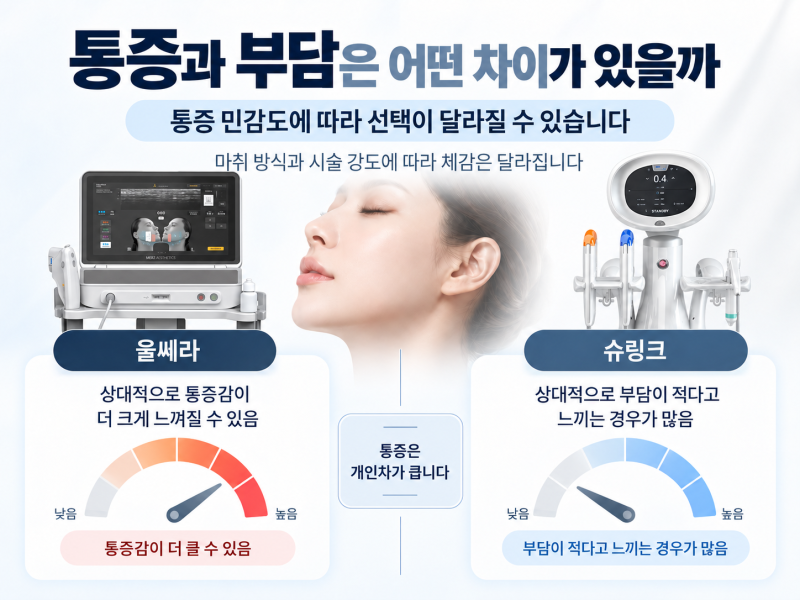
Pain comparison: Ulthera may feel more painful, while Shurink is often felt as less burdensome. Pain varies by person and anesthesia.
Areas close to bone, such as around the jawbone or cheekbones, may feel more tingling or heavy. On the other hand, if you're sensitive to pain or trying lifting for the first time, you might consider starting with a gentler approach and gauging how your skin responds. That said, less pain doesn't mean less effectiveness, and more pain doesn't necessarily mean better results.
Should you be more careful if you have little facial fat?
If the depth and placement of ultrasound energy are off, volume in areas you didn't intend to treat may also appear reduced.
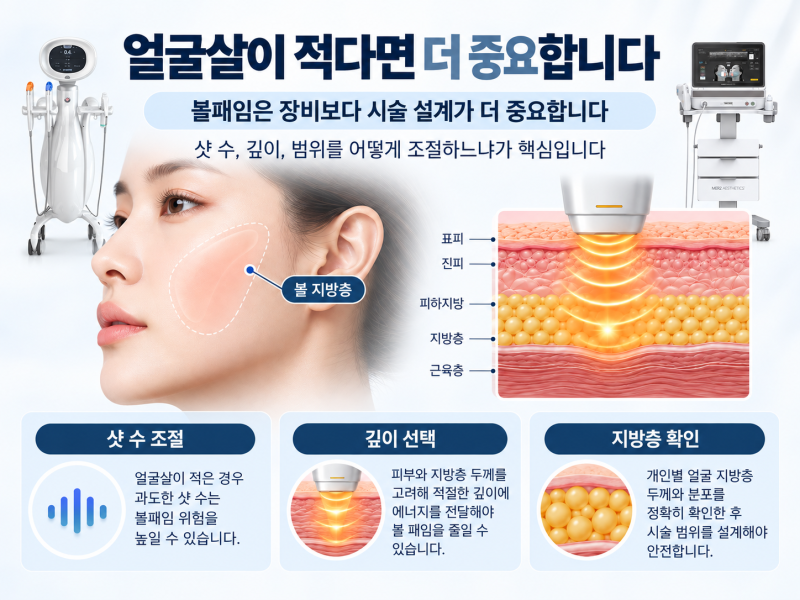
For thin faces, treatment design matters more than the device to avoid cheek hollowing: adjust shot count and depth, and check the fat layer.
This is especially a concern for faces with naturally thin cheeks or a hollow look below the cheekbones, where worries about cheek hollowing can increase. In these cases, how the treatment is planned matters more than which device you choose, particularly distinguishing between areas that should not be treated and those that need it. Adding more shots doesn't always lead to better results.
Does cost factor into your decision?
In actual consultations, cost is just as important as results. Generally, Shrink is more accessible for people who want regular maintenance, since each session costs less. Ulthera, which carries a relatively higher cost, tends to attract people who plan for longer intervals between sessions. Prices can vary based on the number of shots, the treatment area, and the clinic's package structure, so it's better to compare the areas you need and your overall plan rather than just the price tag.
So what should you base your decision on?
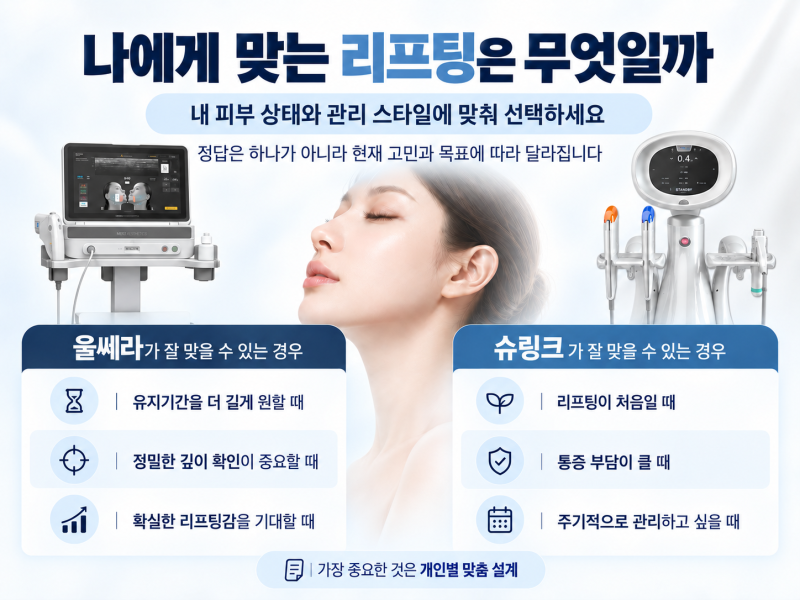
Which suits you? Ulthera for longer duration, precise depth and a clear lift; Shurink for first-timers, pain concerns or regular care.
If you're trying lifting for the first time or want to reduce discomfort, Shrink may be worth considering. If you prefer a more precisely planned approach that lets you view the structures beneath your skin, Ulthera may be the better fit. That said, the decision shouldn't rest on the device name alone. It's better to consider how much facial fat you have, your skin thickness, where the sagging begins, and how much change you're hoping for. Even the same Ulthera or Shrink can produce different results depending on who it's used on and how.

Video still of Dr. Park Si-hyun with the words: "True beauty is finding what makes you, you."
In the end, what matters isn't choosing the most expensive device or the highest number of shots. It's accurately identifying the depth and areas your face needs and treating them at the right intensity.
This post is a medical advertisement written by the clinic for the purpose of providing medical information. It complies with Article 56, Paragraph 1 of the Medical Service Act regarding medical advertising. Results may vary depending on individual constitution and health condition, so please make treatment decisions after thorough consultation with your medical team.

Frequently Asked Questions
How do Ulthera and Shrink differ?
The underlying principle is similar, but each device delivers energy differently, uses different cartridge configurations, and gives practitioners different information during treatment, so the treatment experience and procedural design can vary. Both are ultrasound lifting devices that use high-intensity focused ultrasound.
What is the biggest feature of Ulthera?
You can view the structures beneath the skin on an ultrasound screen during the procedure. By checking skin thickness and the position of the fat layers, it helps the provider decide the depth at which to deliver energy.
How long do Ulthera and Shrink results last?
Ulthera results are often described as lasting roughly 6 months to a year, while Shrink results are typically said to last about 3 to 6 months. However, these figures don't apply equally to everyone. How long the results feel can vary with age, skin elasticity, lifestyle habits, and the intensity and number of sessions.
How does lifting pain differ?
Pain varies with the treated area, the intensity, and each person's sensitivity. Areas close to bone, such as around the jawbone or cheekbones, may feel more tingling or heavy. Less pain doesn't mean less effectiveness, and more pain doesn't necessarily mean better results.
Should you be more cautious with lifting if you have little facial fat?
Yes. For faces like these, it's important to plan by distinguishing between areas that should not be treated and those that need treatment. If the depth and placement of ultrasound energy are off, volume in unintended areas may appear reduced. Faces with thin cheeks or a hollow look below the cheekbones may have greater concerns about cheek hollowing.
Is Ulthera more effective than Shrink?
There isn't enough data from direct comparisons under identical conditions to conclude that one device is better than the other. In practice, it's common to hear that Ulthera tends to produce a stronger sensation and longer-lasting results, but effectiveness also depends on the treatment area, energy intensity, and how shots are distributed.